
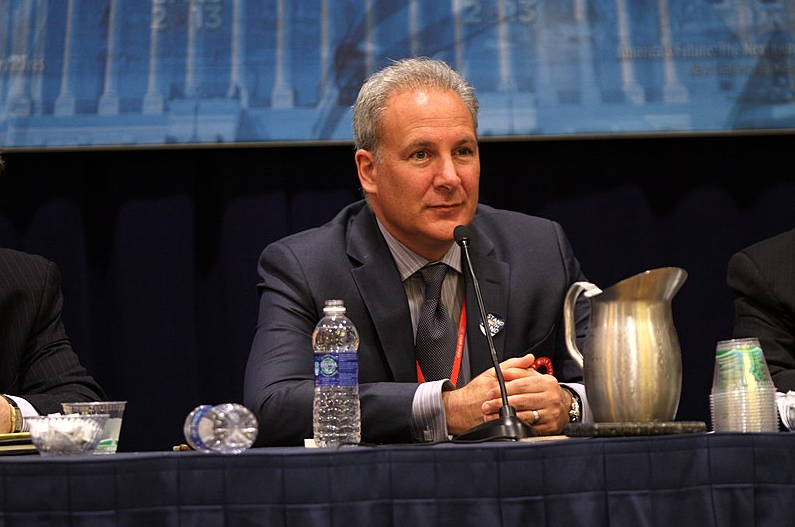
In a landmark ruling, an Australian court has ordered two major media companies to compensate American economist Peter Schiff with over half a million dollars for defamation. This judgment is a significant development in an unusual and complex case involving a global tax evasion probe led by the IRS and various other countries’ governments, targeting Schiff, who is well-known for his appearances on conservative media.
The origin of this legal battle traces back to a scrutiny of Schiff’s bank in Puerto Rico. Despite extensive investigations, authorities could not press any charges against him. However, the investigation’s details were allegedly leaked to prominent media houses including The New York Times and Australian outlets The Age and 60 Minutes, both owned by media conglomerate Nine. These media outlets reportedly interpreted Schiff’s advocacy for low-tax policies as an indication of potential tax law violations.
The fallout from these media reports was severe for Schiff’s bank. It faced a series of setbacks, ultimately leading to its closure by Puerto Rican authorities. Notably, the IRS was mistakenly credited for this action, falsely implying involvement in money laundering and tax evasion, although the investigation yielded no evidence to support these accusations.
The Australian court’s decision came after Schiff sued the media entities and two reporters, Charlotte Grieve and Nick McKenzie, for their involvement in a TV segment and article that suggested Schiff’s involvement in illegal activities. While the court ruled the TV segment as defamatory, it found the article to be non-defamatory.
Evidence presented during the lawsuit revealed a significant disconnect between the internal research of these media outlets and the narratives they presented publicly. Interviews and transcripts showed their sources often confirming Schiff’s bank’s compliance with regulations, contrary to the impression given in the media reports.
One segment on Australian 60 Minutes implied that Schiff’s Euro Pacific Bank was a haven for money launderers and criminals due to its allegedly lax client vetting processes. However, court-disclosed documents painted a different picture, with one confidential source describing the bank’s thorough vetting process.
Moreover, the journalists were accused of securing an interview with Schiff under false pretenses, and subsequently using the mere existence of an investigation as proof of wrongdoing. This approach was heavily criticized, particularly given Schiff’s denial of any illicit activities and the journalists’ inability to provide concrete evidence to the contrary.
Adding to the controversy, shortly after the defamation ruling, both McKenzie and Grieve received prestigious journalism awards, despite the criticism of their reporting methods in this case.
The situation was further complicated by a statement from Nine Media, which, while acknowledging the court’s findings, maintained its stance on the importance of its journalism, citing the difficulties posed by Australian defamation laws in reporting on matters of public interest.
The case also highlighted the Puerto Rican regulator’s role in the bank’s closure. Initially deemed “critically insolvent,” this narrative was later contradicted by the appointed trustee, who stated the bank had sufficient funds to cover all deposits. The regulator’s announcement was not based on financial crime allegations, a clarification made after the IRS attempted to associate its investigation with the bank’s closure.
This saga has underscored the complex interplay between government agencies, the media, and individuals in the public eye, raising questions about media ethics, the role of government in financial regulation, and the impact of high-profile investigations on individuals and businesses.