
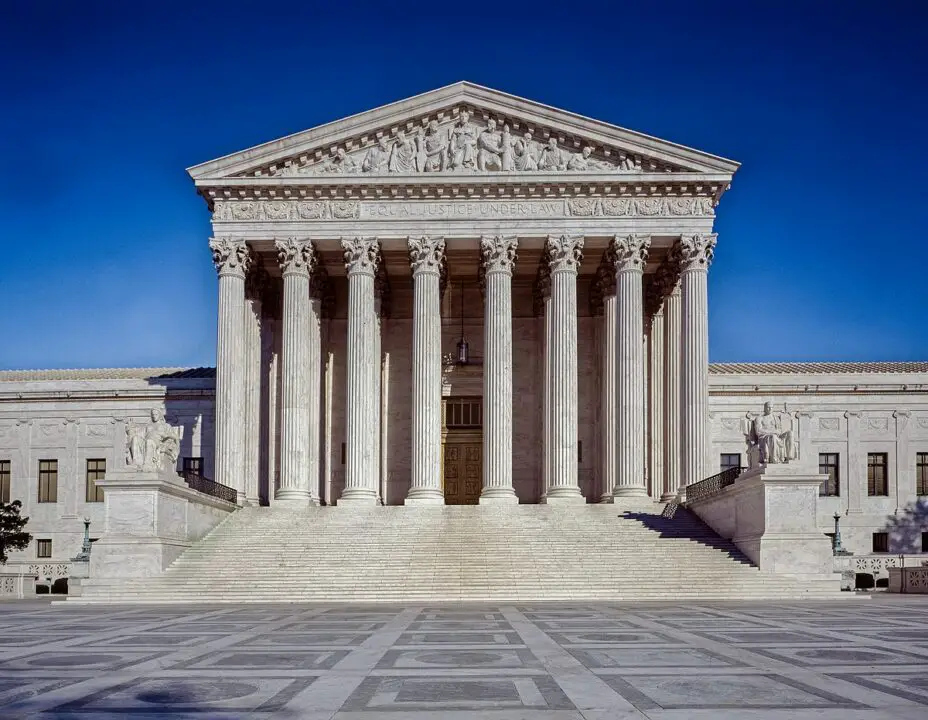
This past Monday, the justices of the United States Supreme Court agreed to look into a law concerning the adoption of Native American children.
The law being examined is the 1978 Indian Child Welfare Act (ICWA), which focuses on the placing of Indian kids with their family members, other Native Americans, or another tribe. The original intent of the law was to see an end to previous actions where hundreds of thousands of Native American kids were taken from their houses by adoption agencies and put in various group homes or just given to white families.
As reported by The New York Times, Indiana, Texas, and Louisiana, along with a group of seven other individuals, issued lawsuits against the federal government concerning the law.
The attorneys representing the state have reportedly stated to the high court that the law “creates a child-custody regime for Indian children that is determined by a child’s genetics and ancestry,” going on to add that “this race-based system is designed to make the adoption and fostering of Indian children by non-Indian families a last resort through various legal mechanisms that play favorites based on race.”
Various Native American groups are attempting to push for the law to remain exactly as it currently stands.
“We know the importance of keeping our children connected with their families, communities, and heritage. ICWA has proven itself as the gold standard of child welfare law, which is why both Republican and Democratic administrations, tribes and tribal organizations, and child welfare experts continue to defend it,” stated Cherokee Nation Principal Chief Chuck Hoskin Jr. and a group of three other tribal heads concurred in a statement. “We will never accept a return to a time when our children were forcibly removed from our communities, and look forward to fighting for ICWA before the Court.”
Many tribes, which includes the Cherokee and the Navajo, became embroiled in the case to defend the law. They put forth statements that implied that the 1978 law “is tied to membership in Indian tribes — which is about politics, not race.”
The tribes, along with the federal government, have also told the Supreme Court that the law has worked as intended overall, but Native American children are still more likely to be taken out of their homes than any other group of children.
Texas went on to state, in its brief, that this was the end consequence of many societal factors. “The United States and tribes make no effort,” stated the representation for the state in their brief, as reported by The Times. “to disprove the common-sense conclusion that today, the high numbers of adoptions and fostering of Indian children are often a sign, not the cause, of the high risk of neglect, violence, gang activity, drug abuse, alcoholism and suicide among Indian children.”