
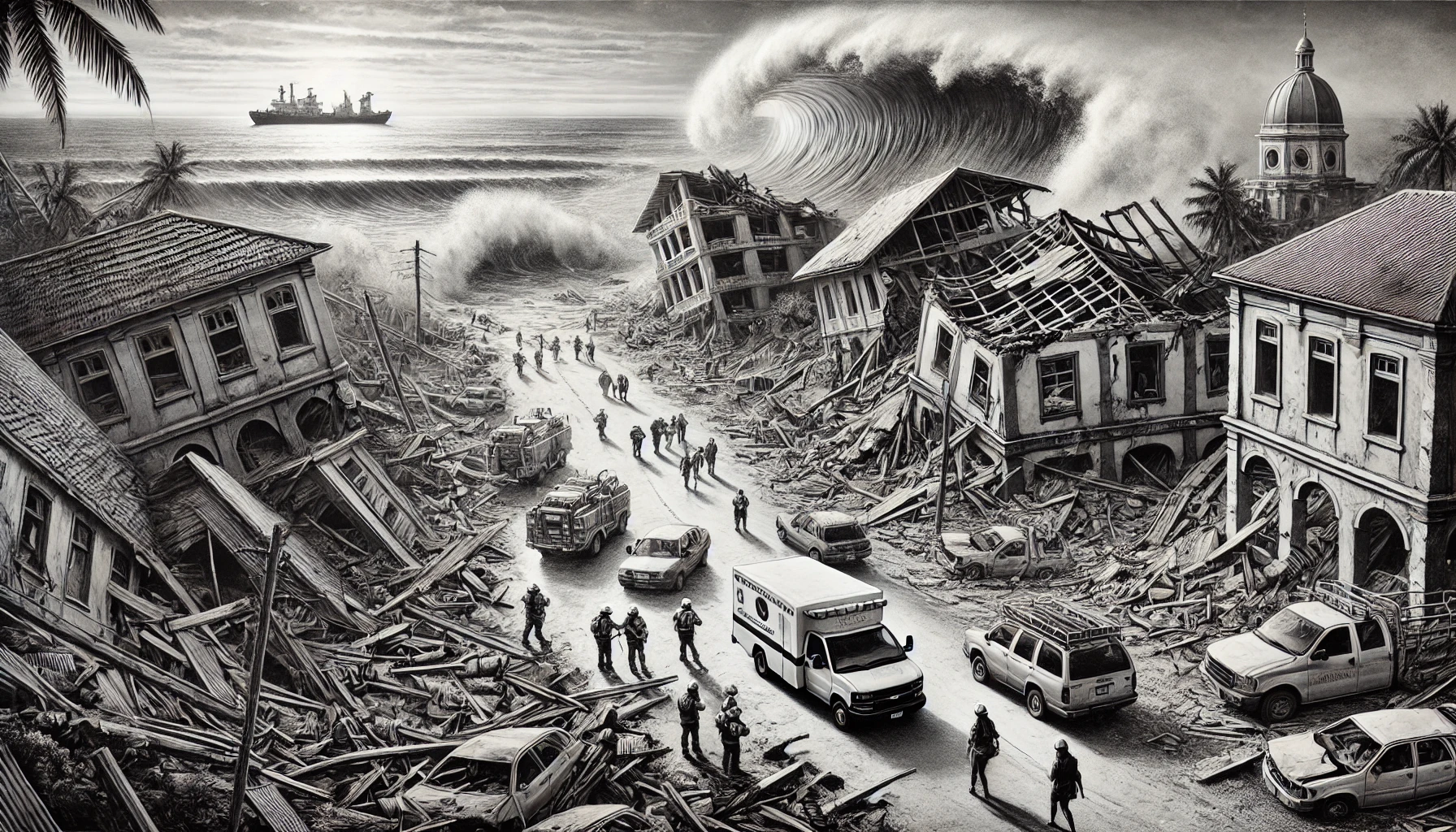
Approximately 130 miles south-southwest of George Town, the capital of the Cayman Islands, a significant 7.6 magnitude earthquake struck the Caribbean Sea on February 8, 2025. The earthquake, which originated at a depth of approximately 10 kilometers, occurred at 6:23 p.m. local time.
In the Cayman Islands, Puerto Rico, the Dominican Republic, Honduras, and Cuba, tsunami warnings were issued immediately in response to the seismic event. As a precautionary measure, authorities in these regions advised coastal residents to relocate to higher ground. Alarms were activated in the northwest region of Puerto Rico, resulting in substantial traffic congestion and evacuations. In the same vein, the Dominican government issued advisories, advising those residing in close proximity to the coast to relocate inland. Nevertheless, the tsunami threat was reduced, and the warnings were subsequently lifted.
The advisory for Puerto Rico and the U.S. Virgin Islands, which was initially issued by the U.S. National Tsunami Warning Center, was subsequently revoked. The Center confirmed that the tsunami threat had passed; however, it advised continued vigilance, and warned that anomalous currents may still be observed in certain areas.
Fortunately, there have been no immediate reports of injuries or substantial damage as a consequence of the earthquake. The epicenter’s remote location likely contributed to the minimal impact on populated areas. In the event of aftershocks or related phenomena, authorities in the affected regions continue to monitor the situation to ensure public safety and preparedness.
The dynamic character of the geology of the Caribbean region, which is located near the boundary between the North American and Caribbean tectonic plates, is emphasized by this seismic activity. The earthquake was the consequence of strike-slip faulting in the superficial crust in the vicinity of this plate boundary. Historical data suggests that the region has been subjected to substantial seismic events in the past, underscoring the significance of resilient infrastructure and preparedness in reducing the potential risks associated with such natural occurrences.