
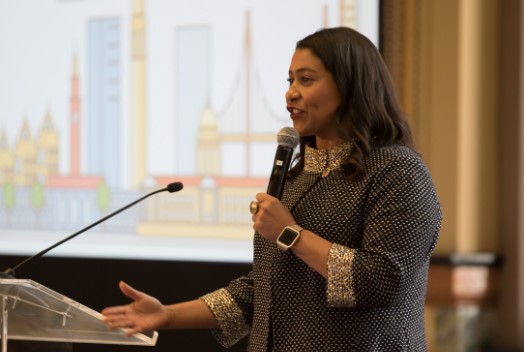
San Francisco Mayor London Breed has criticized Good Morning America for claiming that it is “too dangerous” to film in the city’s downtown, arguing that such statements hinder the city’s recovery from the pandemic.
During a segment discussing the exodus of stores from the crime-ridden city, ABC’s chief national news correspondent, Matt Gutman, stated that they had been advised against filming live from Union Square or the closed Westfield Mall due to safety concerns. In response, the mayor’s office disputed the notion that the area is dangerous and instead attributed the departure of major retailers to a lack of customers resulting from remote work and shifting shopping trends.
While acknowledging the challenges faced by San Francisco, Mayor Breed emphasized that violent crime in the Downtown and Tenderloin areas has decreased compared to the previous year. She also highlighted that San Francisco has a lower overall violent crime rate compared to other cities. However, police data indicates an increase in criminal activity, with robberies up by 14.7% and homicides up by 10% compared to the same period last year. Motor vehicle thefts and arson cases have also risen by more than 5% since last year.
The city has also witnessed a rise in homelessness, with generous assistance programs attracting an increased number of individuals, resulting in tented shanty towns in downtown and the Tenderloin district. Additionally, drug-related deaths, primarily caused by fentanyl, have surged by 41% in the first quarter of 2023 compared to the same period last year. The negative impact of crime and drug use, coupled with the closure of several major retailers, has hampered the city’s recovery efforts from the pandemic.
Westfield, the largest mall in San Francisco, recently defaulted on its loan and returned the downtown mall to the lender, citing “unsafe conditions” and a lack of action against rampant criminal activity. Numerous other major stores, including Whole Foods, Old Navy, Gap, and Office Depot, have also announced closures in the area. The declining retail presence, combined with reduced foot traffic, has led to an increase in office building vacancies, reaching a historic high of 31% in May.
The decrease in property taxes resulting from these issues could cause an annual revenue loss of up to $196 million by 2028, contributing to a projected $1.3 billion budget shortfall. These challenges have been acknowledged by the city’s Controller’s Office, which attributes the shortfall to lower revenue projections.
Despite the mayor’s concerns, the negative coverage of crime and drug issues in San Francisco continues to impact the city’s efforts to recover from the pandemic, as evidenced by the closure of major retailers and the financial implications faced by the city.