
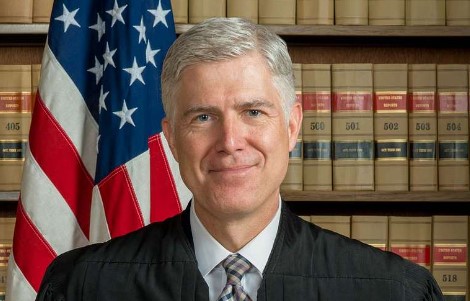
In a Supreme Court case involving a Christian web designer’s refusal to create websites for same-sex weddings, Justice Neil Gorsuch criticized Justice Sonia Sotomayor’s dissenting opinion. The court ruled 6-3 that Lorie Smith, the web designer, could not be compelled to violate her free speech rights and religious beliefs by creating websites for homosexual marriages, despite Colorado’s anti-discrimination law.
Gorsuch argued that Sotomayor “reimagines the facts” of the case and fails to address the central question of whether the state can force someone providing expressive services to abandon their conscience and promote a message they disagree with. He noted that Sotomayor’s dissent mischaracterizes the majority opinion, which clearly states that a Colorado business cannot discriminate based on who the customer is.
The dissenting opinion raises hypothetical scenarios involving photographers and stationers, but Gorsuch finds these arguments irrelevant to the case at hand. The ruling overturns a previous lower court decision that went against Smith, who claimed her First Amendment rights were violated by being compelled to promote statements contrary to her faith.
Justice Elena Kagan and Justice Ketanji Brown Jackson joined Sotomayor in dissent, arguing that the ruling creates a new license to discriminate and perpetuates second-class status for gays and lesbians. Sotomayor emphasized the importance of public accommodations rules in preventing discrimination and ensuring equality in a free and democratic society.
The case attracted attention due to the clash between First Amendment rights and protections against discrimination based on sexual orientation or gender identity. Gorsuch asserts that tolerance, not coercion, is the solution in line with the First Amendment, and the government has no right to dictate what individuals should think or say. Smith has maintained that she has no issue working with the LGBTQ community but objects to participating in same-sex weddings based on her beliefs.
The ruling reaffirms the right to freedom of speech and expression, as well as the protection of sincerely held religious beliefs. Gorsuch concludes that this right is fundamental to the health of the Republic and the principles enshrined in the First Amendment.