
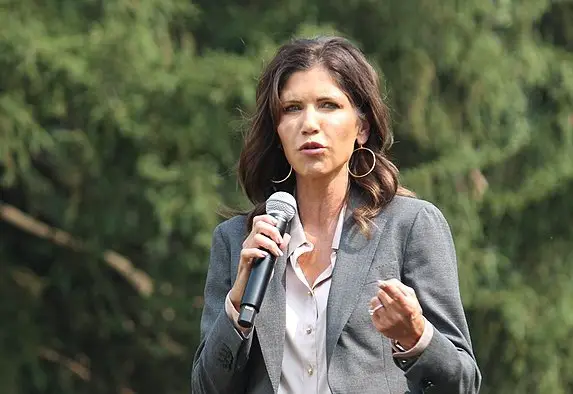
South Dakota Governor Kristi Noem didn’t hold back in her criticism of Ben & Jerry’s, the progressive ice cream brand, following their controversial tweet calling for the return of Mount Rushmore to Native Americans. In an interview with Fox News, Noem, a Republican, referred to the company’s founders as “a bunch of liberal Vermont businessmen” who lacked a deep understanding of American history and believed they knew everything about the country.
According to Noem, Mount Rushmore stands as the ultimate symbol of freedom, representing the leaders who guided the nation through challenging times. She urged Americans to take pride in their country and denounced Ben & Jerry’s for their actions, suggesting they were misguided and unaware of the consequences.
The fallout from Ben & Jerry’s tweet has had a significant impact on their parent company, Unilever. Since the incident, the company’s market capital has decreased by $2.6 billion, with shares experiencing a decline of 0.5 percent on Wednesday and an additional 1 percent drop at the start of Thursday’s trading.
While Noem has been considered a potential contender for the Republican party’s 2024 nomination, her focus remains on her current role as governor. In a recent radio interview, she expressed her belief that with Donald Trump’s potential involvement, it would be challenging for anyone else to secure victory.
Ben & Jerry’s, founded by Ben Cohen and Jerry Greenfield, both longtime allies of Bernie Sanders, faced a barrage of criticism on social media following their controversial tweet. Users on Twitter called out the company’s perceived hypocrisy and suggested they should donate their assets and land to indigenous people if they truly believed in their message.
This isn’t the first time Unilever, the parent company of Ben & Jerry’s, has faced controversy. It was designated as an “international sponsor of war” by Ukraine due to its operations in Russia, which obliged them to contribute directly to the war effort. Additionally, in 2021, Ben & Jerry’s attempted to halt the sale of its ice cream in certain areas of Israel, but faced resistance from Israeli license-holder Avi Zinger, who continued production and distribution in the Israeli settlements.
Ben & Jerry’s anti-Zionist stance drew criticism for its perceived anti-Semitic undertones. Unilever was later discovered to be selling the ice cream in the disputed area through a third-party distributor.