
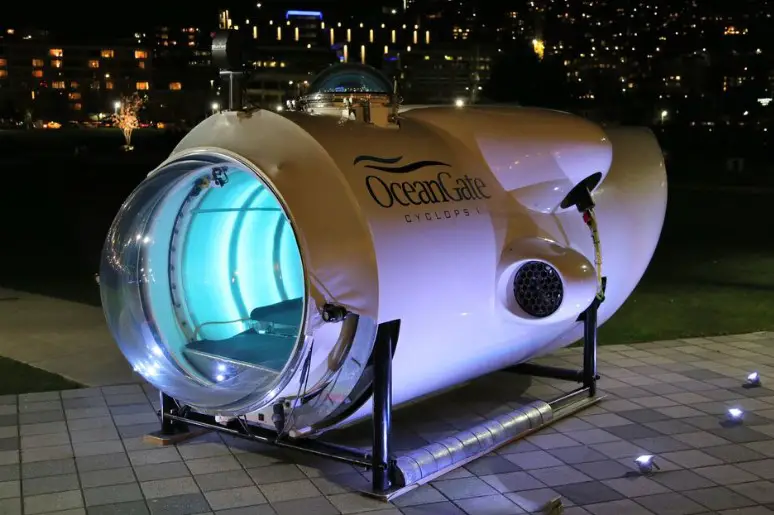
The five individuals aboard the ill-fated OceanGate submersible were likely aware of the impending catastrophe between 48 and 71 seconds before it transpired, painting a horrifying scene akin to a suspenseful movie, according to an expert’s analysis.
Spanish engineer and underwater specialist, José Luis Martín, provided insights into the final moments of the doomed Titan before its destruction on June 18, during its dive to the Titanic shipwreck. Martín explained that an electrical malfunction during the controlled descent likely caused the submersible to lose propulsion, resulting in a disruption of the Titan’s longitudinal stability.
According to Martín’s assessment, the malfunction occurred at a depth of approximately 5,500 feet, causing the submersible to plunge uncontrollably towards the seafloor. With damaged control and safety systems, the pilot, OceanGate CEO Stockton Rush, was unable to activate the emergency lever to drop weights and resurface. As a result, the submersible changed position and rapidly descended vertically due to the unbalanced weight of the passengers near the view port.
The expert described the harrowing scene, where the passengers found themselves in complete darkness, realizing the severity of the situation within a 48 to 71-second free fall. Martín highlighted the unimaginable horror, fear, and agony they must have experienced during those moments.
Further into the descent, the immense increase in underwater pressure caused a powerful compression of the sub’s carbon-fiber hull at a depth of around 9,000 feet. The sudden contraction of the hull, out of sync with the acrylic viewport, likely led to micro-fissures and an implosion, resulting in instantaneous death for all aboard.
Structural issues with the hull have been cited as contributing factors to the tragic implosion. Professor Stefano Brizzolara of Virginia Tech, an expert in ocean engineering, suggested that a defect in the pressure hull could have initiated the structural collapse under extreme pressure. Carbon fiber, known to be susceptible to defects, exhibits a more fragile behavior compared to other materials.
Brizzolara explained that even a small leak at such depths would have caused water to rush in at a speed of approximately 620 mph, instantly claiming the lives of everyone on board.
The individuals lost in the disaster included OceanGate CEO and Titan pilot Stockton Rush, French Titanic expert Paul-Henri Nargeolet, British billionaire Hamish Harding, Pakistani businessman Shahzada Dawood, and his son Sulaiman Dawood.
Following the tragedy, OceanGate has refrained from commenting and suspended all exploratory and commercial operations due to heightened scrutiny surrounding Rush’s safety protocols and their potential role in the accident.
In a previous interview, Rush expressed a desire to be remembered as an innovator, acknowledging that he had broken some rules with logical reasoning and sound engineering behind him, echoing General Douglas MacArthur’s sentiment that one is remembered for the rules they break.