
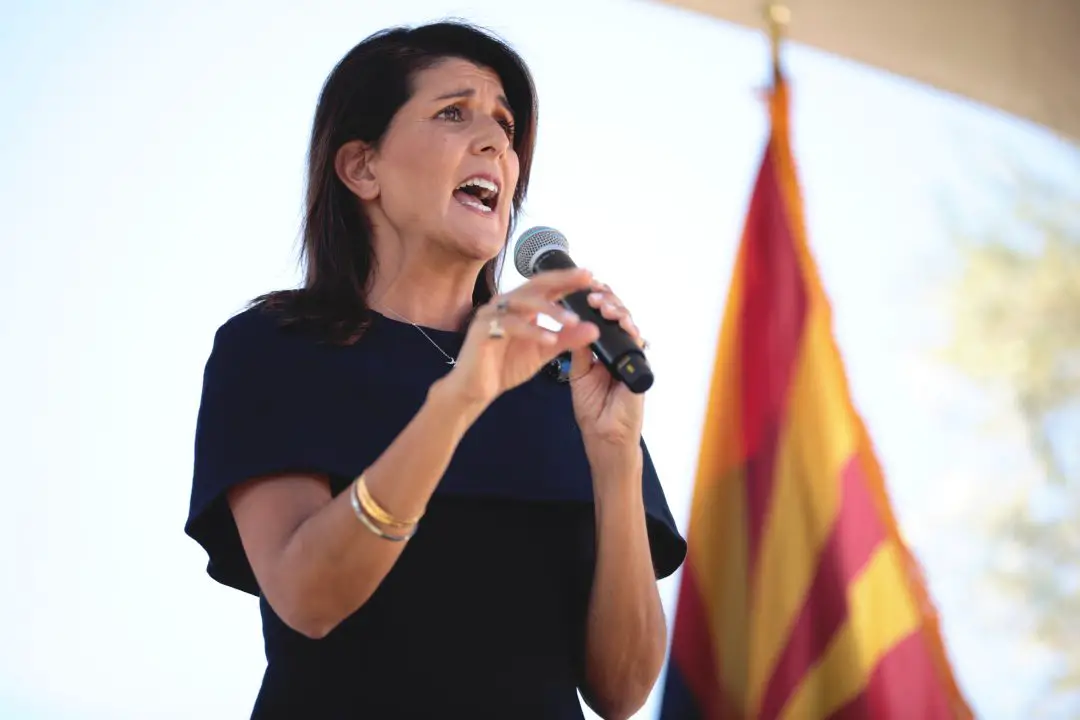
In a highly charged political moment, the Republican presidential candidate Nikki Haley compiled a striking list that stirred up controversy. This list included New York Democrat Rep. Alexandria Ocasio-Cortez and other Democrats who had cast their votes against a House resolution expressing unwavering American support for Israel.
As news of her inclusion reached Ocasio-Cortez, she responded with a hint of sarcasm on Twitter, exclaiming, “Oh look, it’s a list!” Alongside her name, the list featured an interesting lineup of Democratic Representatives, including Jamaal Bowman (New York), Rashida Tlaib (Michigan), Ilhan Omar (Minnesota), Summer Lee (Pennsylvania), Ayanna Pressley (Massachusetts), Cori Bush (Missouri), Andre Carson (Indiana), and Delia Ramirez (Illinois).
The vote result was quite lopsided, with 412 representatives supporting the resolution and a mere nine Democrats voting against it. Notably, Representative Betty McCollum (D-MN) took a different stance, opting to vote “present.”
Seizing the opportunity to express her perspective, Ocasio-Cortez urged, “Let’s call this list ‘Champions for Justice’ or perhaps ‘Those who Speak Out against Human Rights Abuses.'” Her response aimed to redirect the focus from the list itself to the underlying issues.
Haley, undeterred by the dissenting votes, confidently proclaimed, “We’re keeping tabs,” in her initial tweet. The mention of nine US lawmakers challenging Israel’s policies highlighted her belief that this voting record would not be forgotten.
The House floor witnessed further heated moments when Democrat Representative Pramila Jayapal from Washington referred to Israel as a “racist state” during an event over the weekend. This incited a swift response from the Republican majority, leading them to introduce a resolution reaffirming their unwavering support for Israel.
In the aftermath of Jayapal’s comment, both Democrats and Republicans voiced their disapproval. Prominent Democrats and more than 40 members of the Democratic majority in the House issued statements denouncing her remark, while the GOP stood firm in their resolution.
The next day, Jayapal attempted to clarify her position, walking back the “racist state” characterization while emphasizing her condemnation of Israeli Prime Minister Benjamin Netanyahu’s government.
In a parallel move, Rashida Tlaib, another vocal critic, utilized the term “apartheid” to describe Israel, fiercely denouncing the resolution on the House floor just one day before the scheduled vote.
“It’s astonishing that we’re here once again, reaffirming Congress’ support for apartheid,” Tlaib passionately remarked. Her words underscored her belief that the resolution was an attempt to whitewash the reality of human rights violations.
Tlaib also reminded her colleagues that bipartisan support doesn’t necessarily equate to righteous support. She invoked the historical backing of the Congress for the racist apartheid government in South Africa as a poignant example.
Meanwhile, amid these fiery debates, the Israeli parliament held a crucial vote just moments before President Isaac Herzog was scheduled to address the legislature, adding a layer of urgency to the unfolding events.