
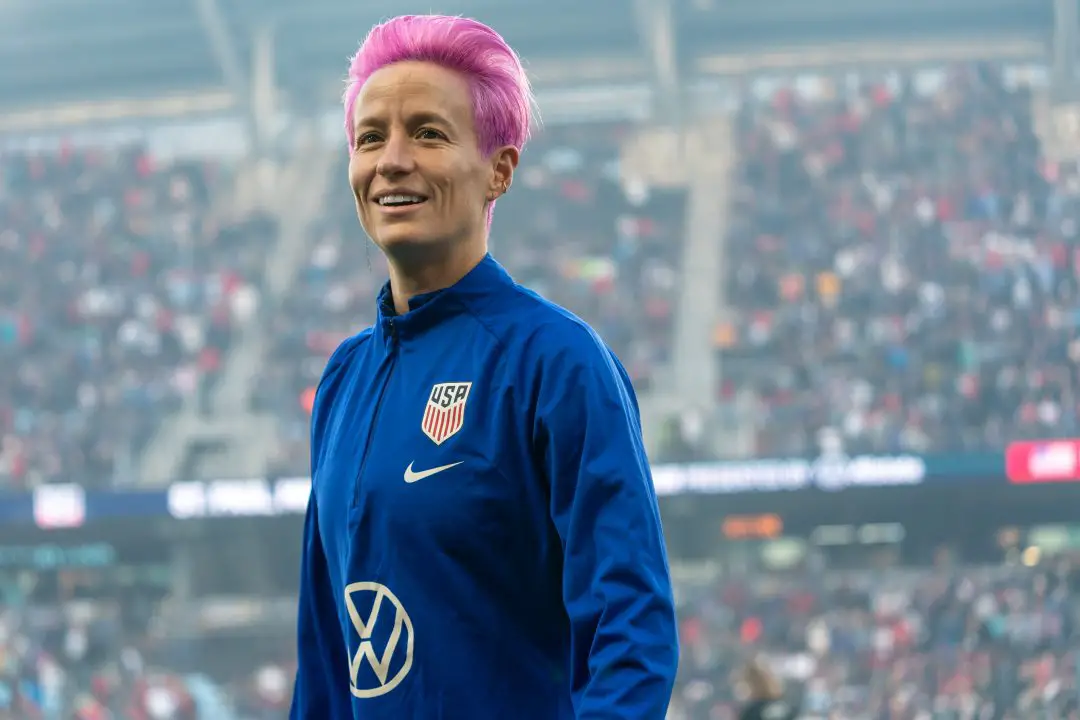
Over the years, the relationship between the United States women’s national team (USWNT) and the national anthem has been a rollercoaster ride of emotions and expressions. From taking a knee in protest to standing with different gestures, the team’s response to the anthem has been a reflection of the times and their individual beliefs.
During the opening match of the 2023 FIFA Women’s World Cup against Vietnam, the USWNT surprised many when the majority of the team stood for the “Star-Spangled Banner,” while most players remained silent. It was a departure from their previous demonstrations, and the decision seemed to indicate a shift in their approach.
On the other side of the pitch, the entire Vietnamese team appeared to be passionately singing their national anthem, “Tiến Quân Ca” or “Song of a Marching Army,” with unwavering unity. All eleven players held their right hands over their hearts, expressing their pride and love for their country.
Among the USWNT players, six stood stoically, with their hands at their sides or behind their backs, while five others placed their hands over their hearts. Some, like Julie Ertz, Alyssa Naeher, and Lindsey Horan, were seen quietly mouthing the words to the anthem, a subtle nod to their respect for the occasion.
Vietnam’s qualification for the World Cup was a historic moment for their women’s national team. They have long faced challenges in gaining equal resources compared to their male counterparts. As they belted out their anthem, it was evident that the players saw this opportunity as a milestone for women’s soccer in their country.
Once the match kicked off, the USWNT’s talent shone brightly, with the reigning two-time FIFA Women’s World Cup champions securing a resounding 3-0 victory against Vietnam. Their skills on the field were a testament to their dedication and hard work.
The anthem moment was a reminder of the complexity of the USWNT’s relationship with the national anthem. It has been shaped by individual beliefs and collective statements on social issues. Whether they take a knee, stand tall, or remain silent, the players’ actions continue to ignite conversations and reflect the ever-evolving landscape of sports and society.
Megan Rapinoe, a prominent figure in the USWNT, has been an advocate for social justice and equality. Her decision to take a knee during the anthem in 2016 made headlines and sparked discussions about athletes’ role in activism.
As the World Cup progresses, the USWNT’s anthem stance may continue to evolve. Whatever path they choose, it will undoubtedly be a reflection of their dedication to the sport and their beliefs in shaping a better world, both on and off the field.