
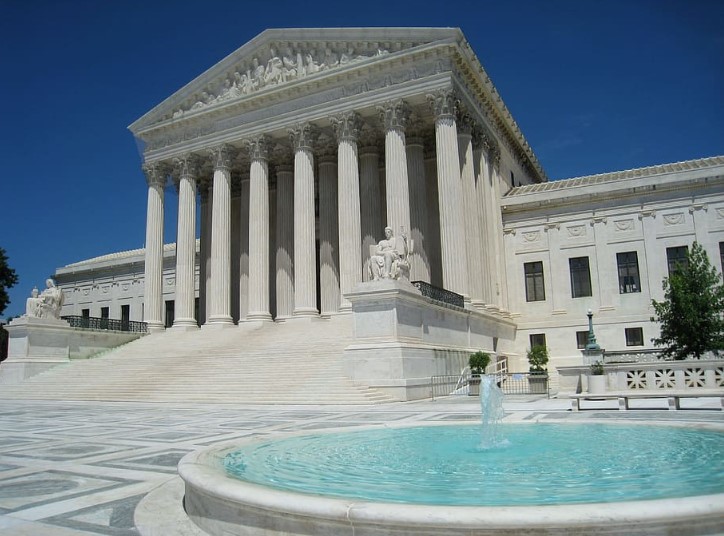
In a significant decision, the Supreme Court has overturned a previous ruling by the U.S. 4th Circuit Court of Appeals that halted the construction of the 303-mile Mountain Valley Pipeline (MVP). The Court’s short, unsigned order issued on Thursday morning vacated the stay orders issued by the lower court, which had sided with environmental groups seeking to stop the pipeline’s progress. This decision came despite opposition from the Biden administration, bipartisan lawmakers, and the fossil fuel industry.
The Department of Justice filed an amicus brief urging the Supreme Court to respect Congress’s judgment, which prioritized the timely completion of the MVP project and deemed further reconsideration unnecessary.
Multiple other briefs were submitted in the case, with opponents of the 4th Circuit ruling pointing to the Fiscal Responsibility Act, which granted approval for all permits related to the pipeline. Additionally, this legislation transferred judicial review jurisdiction from the 4th Circuit to the U.S. District of Columbia Circuit Court of Appeals.
After the lower court’s ruling, the pipeline’s developer promptly requested the Supreme Court to vacate the stay, and the Court granted the plaintiffs a deadline to respond before reaching its decision to allow the construction to proceed.
Various parties, including GOP Chief Deputy Whip Guy Reschenthaler and Sen. Joe Manchin, expressed their support for the pipeline project and the Supreme Court’s decision. The Laborers’ International Union of North America, West Virginia Governor Jim Justice, American Gas Association, American Petroleum Institute, Chamber of Commerce, and counsel for the U.S. House of Representatives also filed briefs in favor of the pipeline.
Equitrans Midstream, the developer of the MVP, predicts that the pipeline will transport approximately 2 billion cubic feet of natural gas per day from West Virginia to consumers in the Mid-Atlantic and South Atlantic regions. The project is expected to generate substantial tax revenue for West Virginia and Virginia and offer significant royalties to West Virginia landowners.