
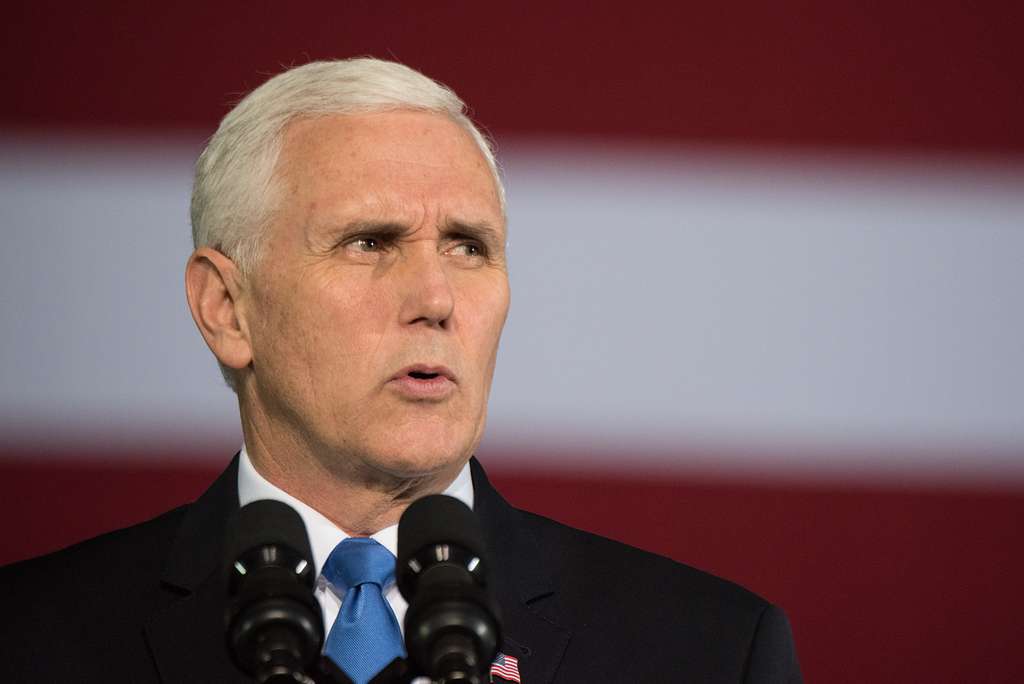
Former Vice President Mike Pence is actively pursuing a potential run for the 2024 Republican presidential nomination, putting him in a unique position as a former vice president seeking the highest office in the land. However, his approach to this endeavor sets him apart from some fellow Republicans who are pushing to remove former President Donald Trump from the primary ballot.
While some Republicans in New Hampshire and several other states are raising questions about Trump’s eligibility based on the 14th Amendment of the U.S. Constitution, Pence has chosen not to align himself with this effort. The 14th Amendment disqualifies individuals who have taken an oath to support the Constitution from holding office again if they’ve “engaged in insurrection or rebellion” against the U.S. or provided aid to its enemies.
The debate over whether Trump meets these criteria has gained momentum in recent months, especially in light of his recent indictments in federal court and in Georgia on charges related to his attempts to overturn the results of the 2020 presidential election, which he lost to President Joe Biden.
When questioned about the efforts to remove Trump from the ballot, Pence adopted a measured stance, emphasizing the importance of allowing voters to make their own decisions. “I always think these questions should be left to voters,” Pence stated during a recent Fox News Digital interview while engaging with customers at a bakery in Rochester, New Hampshire, a state that plays a crucial role in the Republican presidential nominating process.
He highlighted that even Republican Governor Chris Sununu of New Hampshire had expressed his expectation that Trump would be on the ballot in the state. Pence went on to express his hope that Trump would also participate in the upcoming Republican presidential debates.
Pence and Trump’s political journey took a dramatic turn on January 6, 2021, when Pence found himself at the U.S. Capitol, overseeing the joint session of Congress tasked with certifying President Biden’s electoral victory. As the violent mob, some of whom were calling for Pence’s harm, stormed the Capitol, the former vice president, along with members of Congress, had to seek refuge to ensure their safety. Pence’s steadfast adherence to his constitutional duties, rather than acceding to Trump’s wishes to overturn the election results, led to a significant rift between the two men.
Trump, despite his ongoing legal issues stemming from the events surrounding the 2020 election, continues to maintain a commanding lead as the front-runner for the 2024 GOP presidential nomination. In contrast, Pence finds himself lagging behind his former running mate, polling in the single digits, along with many other Republican presidential contenders.
Pence’s decision not to support efforts to exclude Trump from the primary ballot underscores the complex dynamics within the Republican Party as it navigates the path to the 2024 presidential election. While both men share a significant political history, their differing approaches to this crucial political juncture may shape the Republican primaries in ways that are still unfolding.