
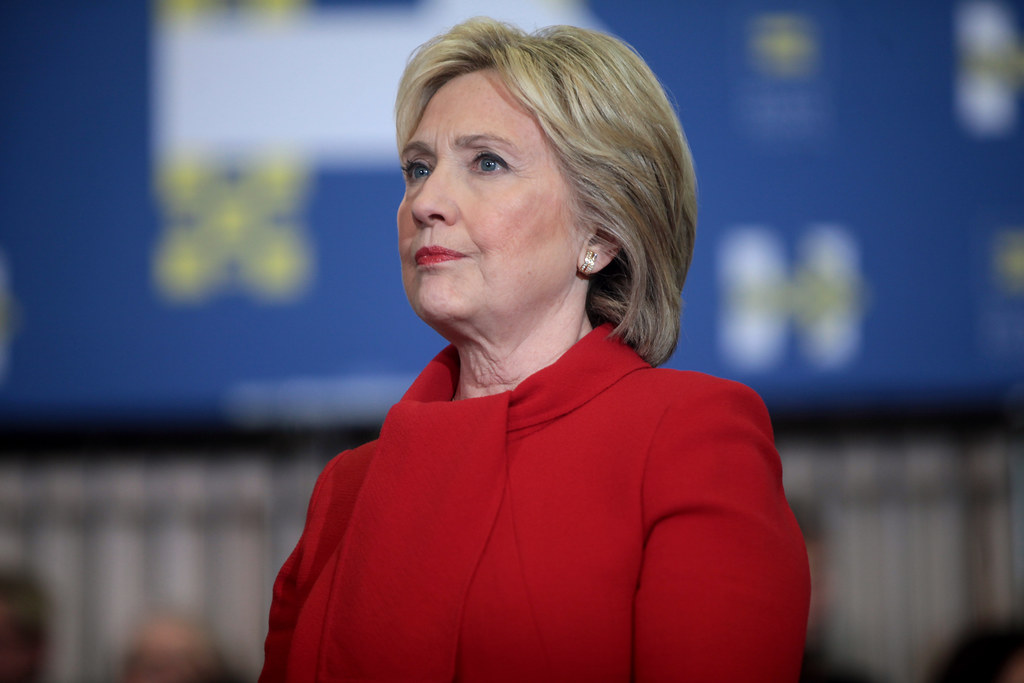
In an unexpected turn of events, Columbia University’s recent lecture featuring former Secretary of State Hillary Clinton was marked by a significant student walkout. On Wednesday, while Clinton addressed the role of women in peace negotiations, a group of students abruptly exited the session, aligning themselves with activists congregated in the foyer of the International Affairs Building to protest against Israel.
The walkout took place approximately one hour into Clinton’s two-hour discourse, with around 30 students from the 300-strong audience choosing to leave. This information was first reported by The New York Times. Their action was a direct response to the institution’s perceived mishandling of the implications that the conflict involving Israel has had within the university community.
A prior incident fueling the students’ discontent involves a missive circulated after the October 7 attacks by Hamas on Israel, which explicitly blamed the ongoing conflict on “the Israeli extremist government.” This letter, signed by numerous students, became the nucleus of the current turmoil.
Subsequently, Accuracy in Media, an oversight entity, launched a provocative campaign on the campus grounds. This campaign entailed deploying mobile billboards that exposed the identities of those who signed the contentious letter, branding them as “Columbia’s Leading Antisemites.” The protesting student body during Clinton’s speech decried this act as a form of “doxxing,” an unauthorized and potentially dangerous disclosure of personal details.
These demonstrators have since called upon the university for immediate legal support for the students named by the campaign and for guarantees of their safety and privacy. Amidst the growing tension, Columbia University has initiated the formation of a task force dedicated to addressing doxxing and the broader safety of its students. Announced just a day before Clinton’s lecture, the task force is a response to the increased demand for student protection.
Dean Keren Yarhi-Milo of Columbia’s School of International and Public Affairs elaborated on the task force’s objectives. In a statement, she explained that this newly established group would focus on devising strategies to prevent doxxing, safeguard students’ identities and personal information, and mitigate the discord stemming from contentious national or international issues that resonate within the university’s diverse community. The dean’s announcement outlines a proactive approach by the institution in an era where student activism and safety on campus are in the limelight.