
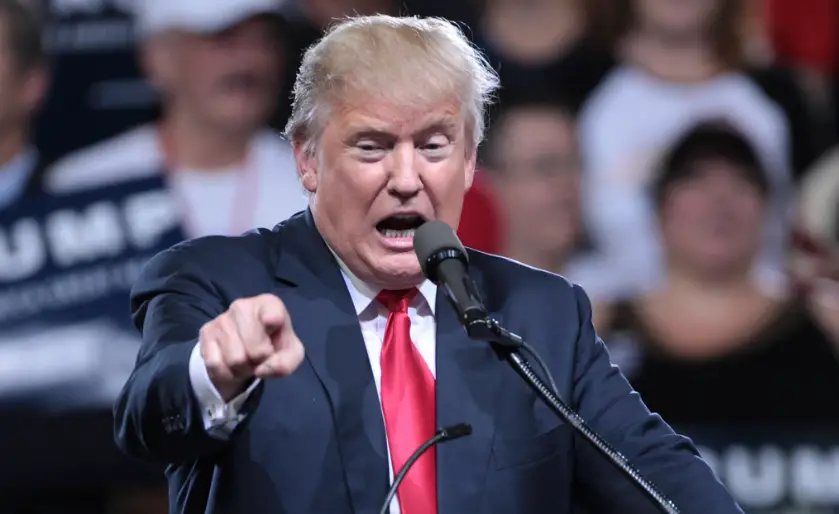
In a remarkable courtroom exchange, ex-President Donald Trump engaged in a heated dialogue with New York Justice Arthur Engoron during his sworn testimony in a civil court proceeding on Monday. This legal battle arises from the allegations made by the New York State Attorney General, Letitia James, who accuses Trump and his corporate entities of engaging in fraudulent activities.
Trump took the witness stand, facing probing questions from Kevin Wallace, a state prosecutor. During the examination, Trump downplayed the significance of his financial statements, asserting that banks seldom regarded them as pivotal, based on his extensive half-century experience in financial dealings. He insisted that the intricate details of these transactions would be elucidated as the trial progressed, dubbing it a “crazy trial.”
Justice Engoron demonstrated a need for brevity, urging Trump to provide concise answers and refrain from making speeches. Chris Kise, Trump’s legal representative, argued for leeway in the responses, given the open-ended nature of the questions posed.
Amidst the legal sparring, Trump acknowledged his role in furnishing necessary information to the creators of his financial statements. However, he expressed that the significance of his responsibility dated back to a period beyond the statute of limitations for most, though seemingly not for himself.
Trump’s testimony revealed that, while he supplied information for financial declarations, the assigned values of his assets, such as Mar-A-Lago and other properties, occasionally deviated from actual worth, which he believed was far greater than documented. He particularly highlighted that the valuation of his brand, a significant asset, was not included in the statements.
A notable moment of contention occurred when Justice Engoron directly challenged Trump’s legal counsel, signaling his frustration with Trump’s digressive responses and asking for the former president to be reined in. Engoron’s firm stance continued as he resisted prolonged narratives, demanding focus on the questions at hand.
The defense insisted that Trump’s comprehensive answers were pertinent and beneficial to the case. Trump’s attorney, Alina Habba, criticized the prosecutor for not formulating better questions, and she defended Trump’s extended responses as necessary to the proceedings.
Trump, amidst his testimony, vehemently criticized the trial as unjust and assailed James’ lawsuit as a politically motivated “witch hunt,” aiming to tarnish his image for her own political gain. He continued to deny any wrongdoing, emphasizing that disclaimers on his financial statements called for third-party evaluation, a point he contends has been upheld in other courts but not in this trial.
The trial, arising from James’ allegations that Trump and his organization misled financial entities about asset values, continues to be a spectacle of legal and political drama. Trump’s children and the Trump Organization are also implicated in what the attorney general describes as “numerous acts of fraud and misrepresentation.”
The confrontation between Trump and Justice Engoron peaked when Trump accused the judge of branding him a fraud without proper understanding of the case or his business prowess, particularly criticizing the undervaluation of his Mar-a-Lago property.
The scene in the courtroom underscored the tension-filled atmosphere, with Wallace eventually inquiring if Trump had concluded his testimony, marking an end to the day’s fiery exchanges.