
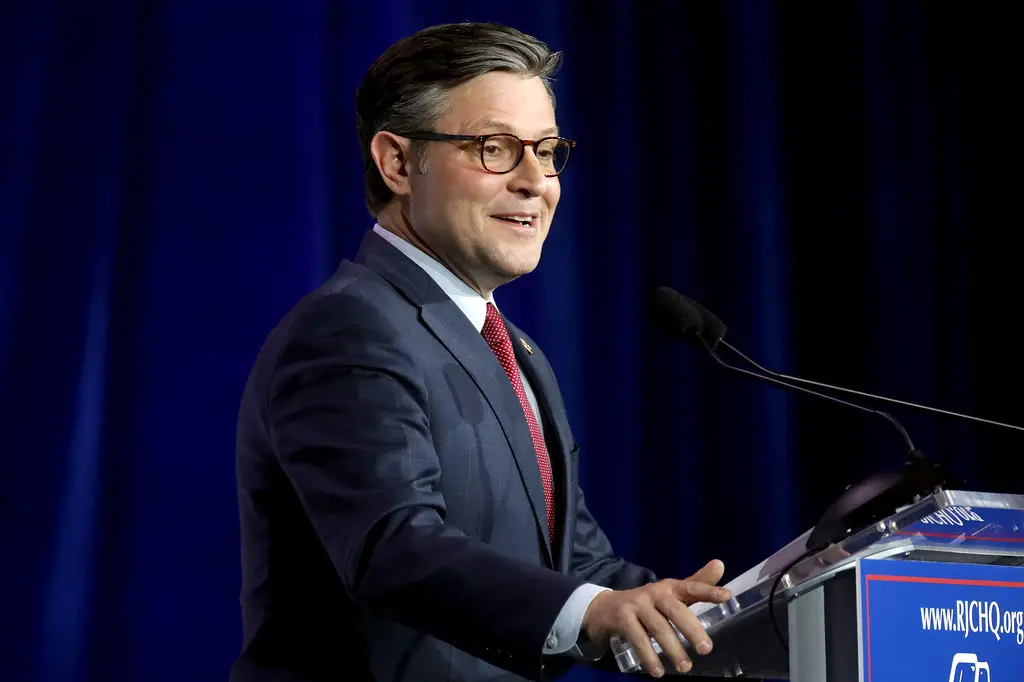
In a recent turn of events, Speaker Mike Johnson (R-LA) has faced backlash from within his own party for allegedly capitulating to opposition forces by incorporating a contentious provision into a major defense legislation. According to sources, the National Defense Authorization Act (NDAA) is set to include an extension of Section 702 of the Foreign Intelligence Surveillance Act (FISA), much to the dismay of many conservative lawmakers.
Section 702, a controversial surveillance tool, was initially scheduled to be extended until April 19. This decision has not only raised eyebrows but also sparked a wave of frustration among conservatives who were deeply involved in the NDAA’s drafting process.
Rep. Majorie Taylor Greene (R-GA) was particularly vocal in her disapproval. In a video statement, she criticized the closed-door approach to finalizing the NDAA, which spans over 3000 pages. She lamented the lack of transparency and the limited opportunity for conferees, including herself, to review the bill.
Greene pointed fingers at Speaker Johnson for allegedly collaborating with Senate Majority Leader Chuck Schumer (D-NY) to forge a deal that would sidestep crucial provisions related to abortion and transgender surgery restrictions, as well as funding for the ongoing conflict in Ukraine. She denounced the move as a betrayal of conservative values and a victory for the Democrats.
The decision to include the FISA extension in the NDAA has been perceived as a significant blow to those advocating for reforms in surveillance laws. House Judiciary Committee Chairman Jim Jordan (R-OH) expressed his disappointment, noting that alternative bills addressing these issues were in the pipeline.
Rep. Warren Davidson (R-OH), who spearheaded a letter signed by 53 members against incorporating Section 702 into the NDAA, criticized the move for undermining public opposition to warrantless mass surveillance and jeopardizing the passage of a robust defense package. Similarly, Rep. Chip Roy (R-TX) expressed his frustration on social media, lamenting the loss of hard-fought provisions in the defense bill.
The controversy has also drawn attention from outside the political sphere. James Czerniawksi, a senior policy analyst at Americans for Prosperity (AFP), supported Davidson’s stance, arguing that the extension of Section 702 without reforms would perpetuate the history of abuses associated with the authority.
This unfolding situation highlights the deep divisions within the Republican Party and underscores the ongoing struggle to balance national security interests with civil liberties and privacy concerns. The inclusion of the FISA extension in the NDAA represents a critical juncture in this debate, with significant implications for the future of surveillance laws in the United States.