
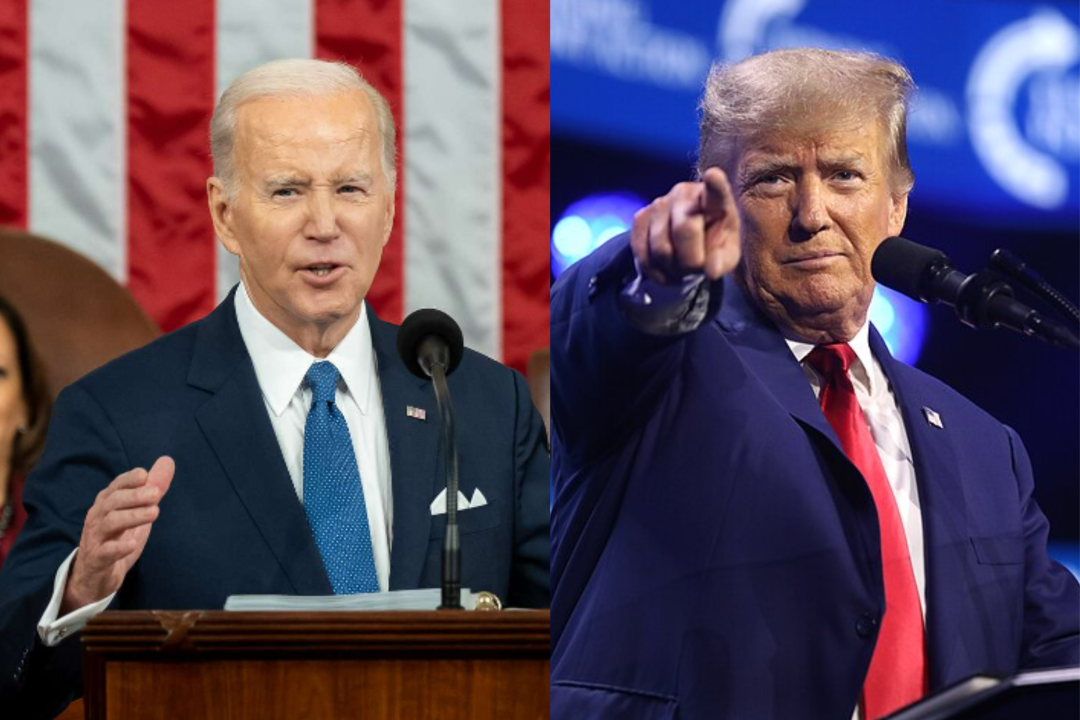
In an era where political discourse has often reached fever pitch, former President Donald Trump’s approach to leadership has continually sparked debate and controversy. His stern stance on immigration and his commitment to stringent law enforcement measures have led to an array of descriptions, with some voices on the political left casting him in a fascist mold. Despite conservative repudiation of such characterizations and a more measured approach from established Democrats, the Biden campaign has adopted a starkly different strategy, drawing direct parallels between Trump and notorious historical figures as the potential for a 2024 electoral rematch looms.
In recent public addresses and through his campaign’s messaging, President Joe Biden has made references comparing Trump to totalitarian leaders, including Adolf Hitler. The Biden team’s spotlight has fallen on Trump’s recent declarations regarding the uprooting of political adversaries and his comments on immigration, which have stirred up historical echoes for some. The campaign’s strategy appears to be a calculated move to rally its base and reach out to the suburban electorate disillusioned by Trump’s discourse.
In contrast, Trump has distanced himself from any such historical analogies, denying familiarity with Hitler’s infamous manifesto. Responses from political analysts suggest a divide in perception of this tactic; while some see it as an effort to engage and mobilize voters, others view it as a sign of Biden’s reluctance to engage based on policy and performance.
As the political landscape continues to evolve, the effectiveness of such comparisons in influencing public opinion remains to be seen. The Biden campaign’s boldness in invoking the specter of dictatorships marks a notable shift in political communication, reflecting the heightened stakes as America looks towards the next presidential election.