
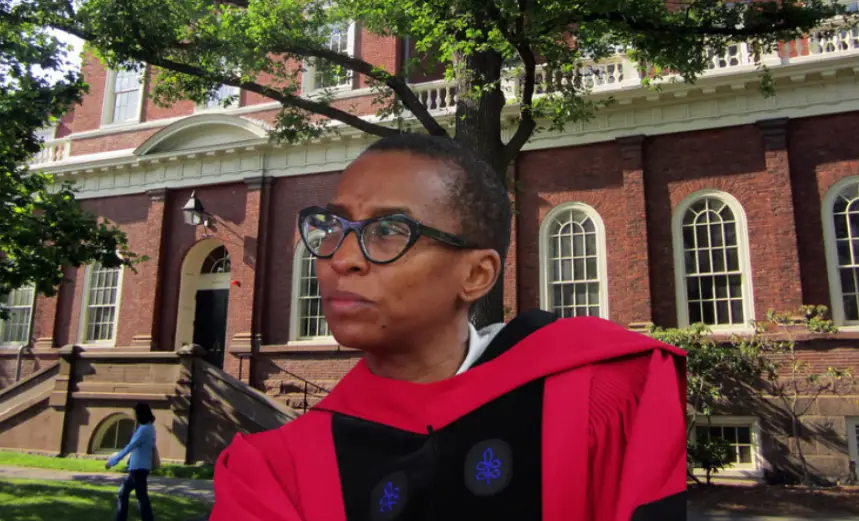
Former Harvard University President Claudine Gay addressed the plagiarism accusations and personal abuse she was subjected to in her first public remarks since leaving the university. In a piece that appeared in The New York Times, Gay talked about the difficulties she faced during her shortest tenure in Harvard history.
Gay, who resigned in the face of growing charges of plagiarism, concentrated on the racial hostility and personal assaults she experienced. Although she admitted to misattributing quotes in her academic work, she avoided calling it plagiarism. The accusations, which ultimately covered half of her published work, were thought to have played a major role in her resignation.
In her essay, Gay called her work “cutting edge” and asserted that it had inspired important investigation by other academics. “I made the painful but necessary decision to resign as Harvard’s president on Tuesday,” the writer stated. I have been under attack, as has the organization I have dedicated my professional life to, for weeks now.”
She described the specifics of the attacks, including being called names and receiving threats of murder. Gay expressed the hope that by stepping down, she would stop her presidency from being used as a weapon in campaigns against Harvard’s core values of excellence, transparency, independence, and truth.
After testifying before Congress about antisemitism on campuses, Gay resigned. During her hearing, she faced criticism for failing to label demands for the annihilation of Jews as harassment. She emphasized the racist threats she encountered in her resignation letter rather than mentioning this testimony.
Her response to the October 7 Hamas terror attack brought her academic record under intensive examination and resulted in roughly 50 plagiarism charges. Gay acknowledged citation mistakes in her New York Times article, but she stood by the credibility and significance of her work.
Earlier, Harvard had declared that Gay had been looked into and cleared, with only two papers needing ‘clarification’ and more citations. Nonetheless, Congress launched an investigation into the claims, and students’ dissatisfaction over what they saw as unfair academic procedures was intensifying.
It was discovered that eight of Gay’s seventeen published scholarly articles contained purported instances of plagiarism. Provost and Chief Academic Officer Alan M. Garber, who witnessed the hearing on December 5 that fueled the issue surrounding Gay’s presidency, will succeed her.