
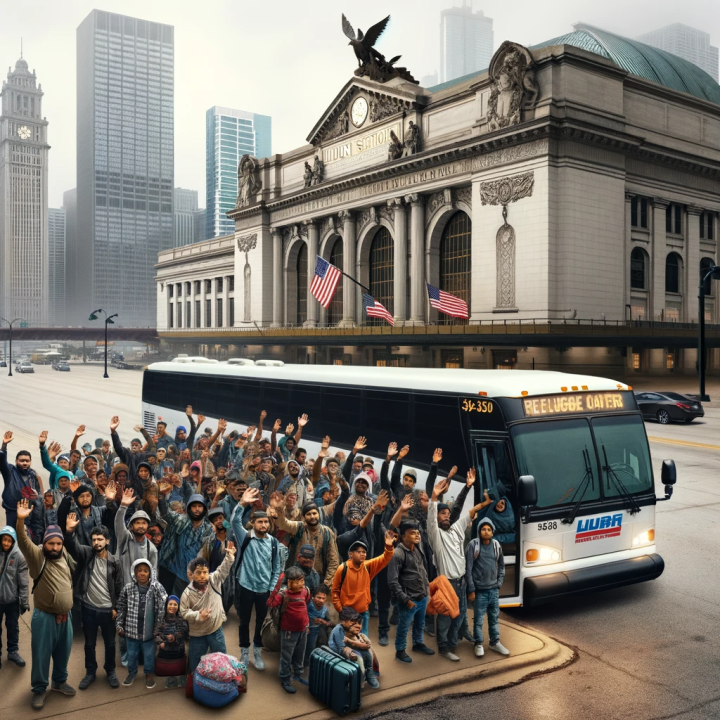
Citing their incapacity to handle the surge, suburban areas surrounding New York City and Chicago are resisting the entrance of buses carrying migrants from the southern border. This opposition is occurring in the midst of an ongoing immigration crisis, which in December alone saw a record-breaking 300,000 interactions at the border.
Trenton, New Jersey, Mayor Reed Gusciora acknowledged his city’s limited ability to accommodate people requesting refuge while expressing sympathy for their plight. In a similar vein, Edison, New Jersey, Mayor Sam Joshi announced on social media that he has ordered the emergency management and law enforcement agencies to charter a bus to return the migrants to the Texas/Mexico border.
Southern states—Texas in particular—have made a point of protesting the bus and airplane transportation of migrants. In an effort to relieve pressure on border communities, Texas Governor Greg Abbott started bussing migrants to New York City and other sanctuary areas last year. Since then, according to his office, about 27,000 refugees have been sent to New York City.
Highway signage in Grundy County, Illinois, close to the Chicago suburbs, specifically forbid migrant buses from utilizing specific exits. Grundy County Sheriff Ken Briley brought attention to the difficulties rural communities experience in accommodating migrants who frequently arrive unannounced and without resources. He voiced concern that this problem is likely to continue, pointing out that rural regions have a smaller tax base than larger cities like Chicago, which makes it harder for them to provide the resources they need.
The predicament is indicative of the larger difficulties municipal governments are facing in handling the influx of refugees. The burden on communities around the nation is increasing, with over 785,000 migrant interactions documented since the fiscal year began on October 1—the largest first-quarter total ever recorded.