
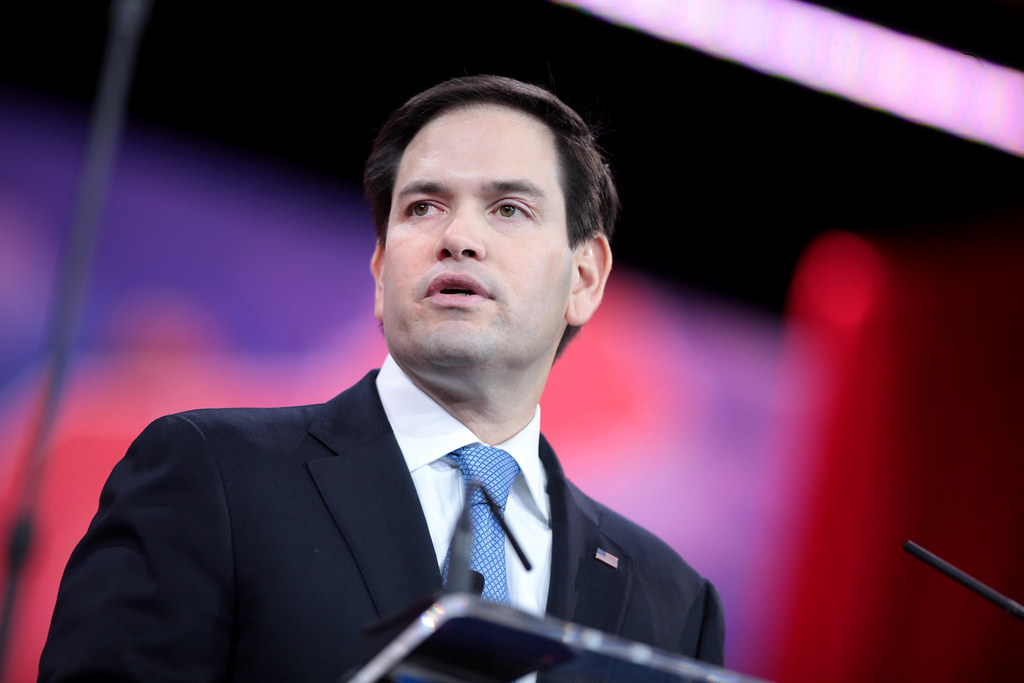
Senator Marco Rubio, representing Florida, has openly criticized major liberal media networks for their decision not to broadcast former President Donald Trump’s speech following his significant win in the Iowa caucuses. Rubio’s remarks, made during an appearance on “Hannity,” likened the networks’ actions to those typical of state-run media in authoritarian regimes.
In the recent broadcast, Rubio expressed his dismay at MSNBC and CNN’s choice to avoid airing Trump’s full remarks post-victory. “This goes beyond mere bias. It’s a concerted effort to silence certain voices, echoing tactics seen in authoritarian media,” he stated. Rubio, who has endorsed Trump ahead of the GOP primary, emphasized the shift in media coverage from bias to outright suppression of certain perspectives.
CNN’s Jake Tapper notably interrupted Trump’s speech, focusing on the former president’s comments about illegal immigration, while MSNBC’s Rachel Maddow defended the network’s decision, citing the challenges of broadcasting statements they deemed untrue.
Rubio’s critique comes amid broader discussions about media responsibility and partisanship in news coverage. The senator pointed out the growing trend where networks not only criticize Trump but also actively seek to undermine his supporters’ views.
The decision by these networks not to air Trump’s speech marks a continuation of the debate on media’s role in shaping public perception, especially in the political arena. Trump’s historic victory in Iowa, where he garnered over 50% of the vote, was a noteworthy event that Rubio argues deserved unbiased media attention.
The senator’s comments shed light on the ongoing tensions between conservative figures and mainstream media outlets. His comparison to state-run media highlights concerns about media impartiality and freedom of speech in the context of American democracy.
This issue has sparked debate among viewers and media critics alike, raising questions about the balance between editorial discretion and the obligation to provide comprehensive news coverage. Rubio’s remarks underscore the complexities of media coverage in an increasingly polarized political landscape.