
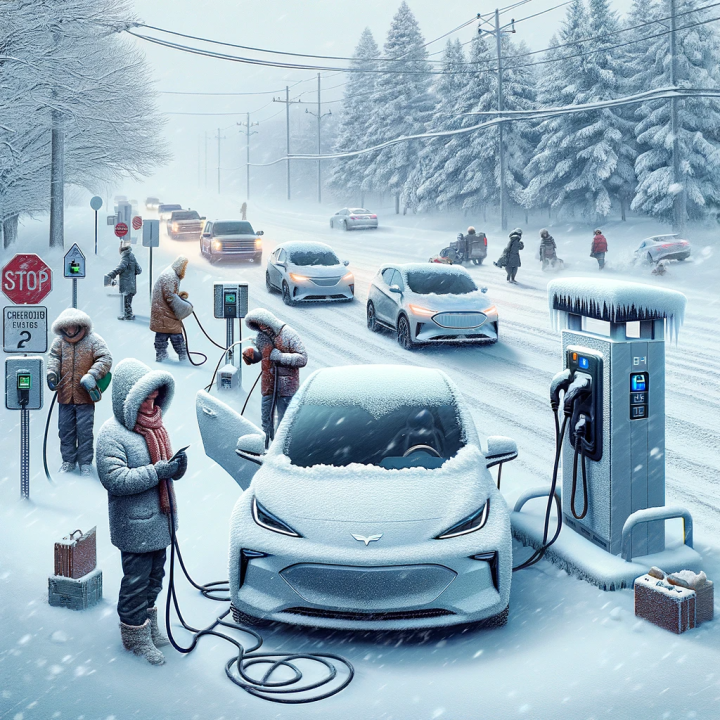
As winter’s grip tightens over the Midwest, electric vehicle (EV) owners are encountering a series of unforeseen hurdles. The plummeting temperatures have brought to light the challenges of operating and maintaining EVs in extreme weather conditions.
Numerous EV owners have voiced their frustrations, as they face prolonged charging times and decreased vehicle performance. “The cold has added layers of complexity to using my EV. I find myself charging more frequently, and the wait times at charging stations have increased significantly,” shared an EV owner, reflecting a common sentiment among those affected.
One particular challenge highlighted was the drastic increase in charging times at stations. A Tesla driver near Chicago noted that a typical 10 to 15-minute charge to boost the battery from 50 to 80 or 90% was taking upwards of an hour and 20 minutes in the cold weather.
Industry experts have pointed out that cold weather can adversely impact the efficiency of electric vehicles, especially regarding the charging process. Mark Bilek of the Chicago Auto Trade Association explained, “Charging an EV in cold weather isn’t as straightforward as it seems. You have to precondition the battery to bring it to an optimal temperature for accepting a fast charge.”
The severity of the situation was evident over the past weekend when charging stations near Chicago were likened to ‘car graveyards’ due to the accumulation of EVs unable to function properly in the frigid conditions. “My car just froze. I have no choice but to have it towed to a service center,” lamented another Tesla owner.
Kevin O’Leary, Chairman of O’Leary Ventures, weighed in on the issue, describing the situation as a ‘striking’ revelation about the limitations of EVs in extreme weather. “We are at a pivotal moment in our transition from gasoline vehicles to EVs, and these challenges with battery performance in cold weather are a crucial part of the learning curve,” he stated on “Varney & Co.”
O’Leary also raised concerns about the environmental impact of EVs, emphasizing the need for greener electricity production methods. “Going green with an EV also means thinking about how we generate the electricity to power these vehicles. It’s a complex equation that needs addressing as we move forward,” he added.
The challenges faced by EV owners this winter are sparking broader discussions about the readiness of electric vehicles and the infrastructure supporting them, particularly in extreme weather conditions.