
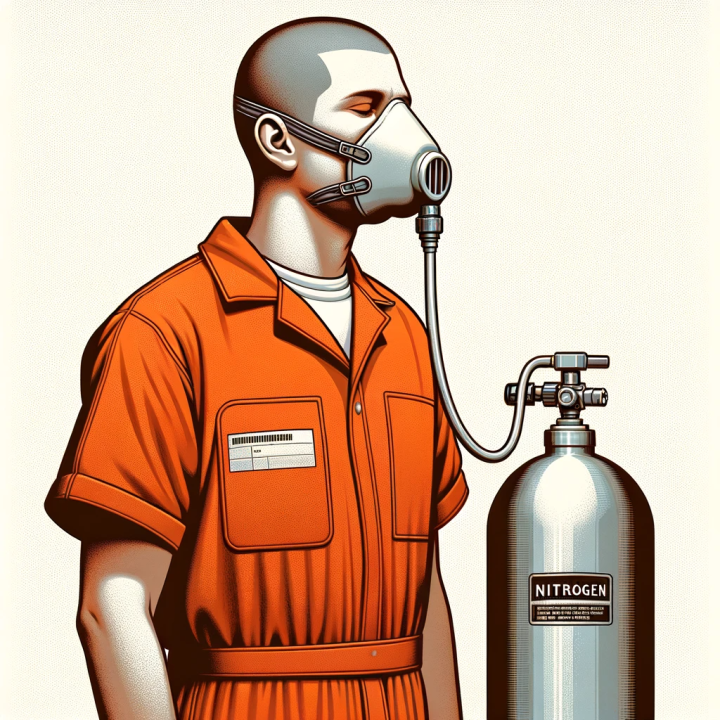
On a somber evening, Kenneth Eugene Smith, 58, faced a historic and controversial execution, becoming the first individual in the United States to be executed using nitrogen hypoxia. This took place at the William C. Holman Correctional Facility in Atmore, Alabama. Smith’s execution, which lasted for an extended and distressing 22 minutes, has sparked a significant debate over the method used.
During the execution, Smith, convicted of a murder-for-hire crime in 1988, was subjected to a 100% nitrogen gas stream. Witnesses, including Smith’s spiritual advisor Jeff Hood, described the execution as distressing and far more prolonged than expected. Hood, who has witnessed multiple executions, called it the most harrowing he had ever seen, noting that Smith convulsed violently and appeared to struggle significantly against his restraints.
The emotional toll of the event was evident as Deanna Smith, Kenneth’s wife, watched in anguish. Smith’s final statement, conveyed through a gas mask, was a poignant critique of the justice system. He expressed his departure with “love, peace, and light,” a stark contrast to the grim circumstances of his execution.
Smith was initially sentenced to death in 1996 for the brutal killing of a preacher’s wife in 1988, a crime for which he received a mere $1,000. His last day was marked by a refusal to eat, indicative of the immense psychological burden he faced.
The execution has raised questions about the use of nitrogen hypoxia, previously untested in the United States. While Alabama officials have defended the method as effective and humane, witnesses and human rights advocates strongly disagree. The execution’s distressing nature and Smith’s apparent suffering have reignited the debate over the ethical implications of capital punishment methods.
This execution, a first of its kind in the nation, marks a significant and contentious moment in the history of the American penal system. It underscores the ongoing debate over the methods and morality of capital punishment.