
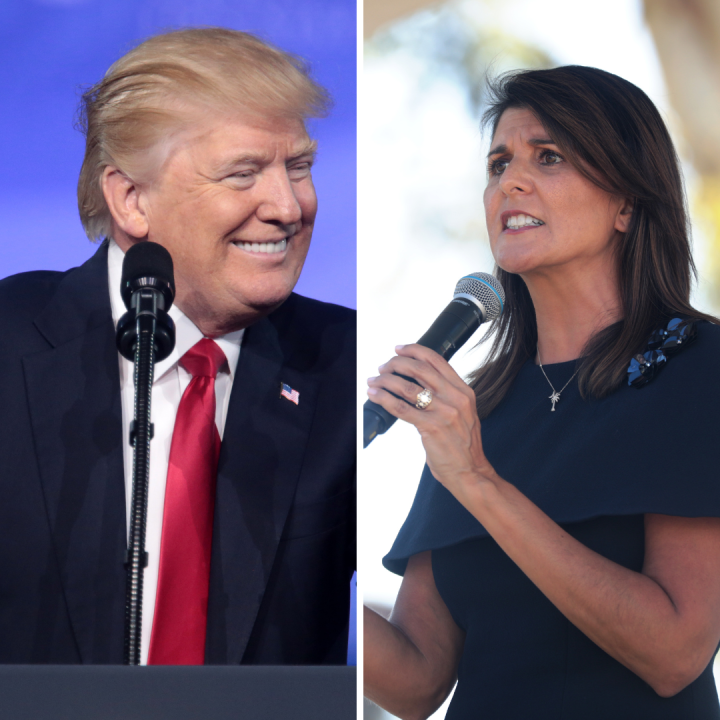
In a remarkable turn of events during Nevada’s Republican presidential primary, former President Donald Trump, despite not being on the ballot, managed to outshine his main competitor, Nikki Haley. This outcome was facilitated by voters who, lacking the option to cast their ballots directly for Trump, chose the “none of these candidates” option, effectively signaling their preference for him over Haley.
Trump’s influence was palpable among his supporters, many of whom explicitly stated their decision to vote for “none of these candidates” as a stand-in for Trump himself. This strategic choice by voters highlights Trump’s enduring sway within the Republican base, even in the absence of his name from the ballot.
Haley, the former South Carolina governor and U.N. ambassador, did not actively campaign in Nevada, with her campaign acknowledging a deliberate choice to focus efforts and resources elsewhere. Despite her strategic decision, the primary’s outcome underscored Trump’s dominant position within the GOP and set a challenging precedent for Haley’s campaign moving forward.
Trump leveraged the occasion to critique Haley on social media, framing the Nevada results as a significant setback for her campaign. Simultaneously, his campaign shifted its attention to South Carolina, the next crucial battleground on the Republican nominating calendar, signaling continued confidence in Trump’s electoral appeal.
The Nevada GOP’s decision to run a presidential caucus in addition to the state-run primary created a unique electoral scenario, with Trump’s campaign urging supporters to prioritize caucus participation. This dual contest system stems from a legal dispute between the state GOP and Democratic-led initiatives to transition from caucuses to a primary system, further complicating the political landscape in Nevada.
As the political drama unfolds, Nevada’s role as a pivotal battleground state in the general election becomes increasingly apparent. With both campaigns gearing up for more intense competition, the events in Nevada serve as an early indicator of the dynamics shaping the 2024 presidential race.