
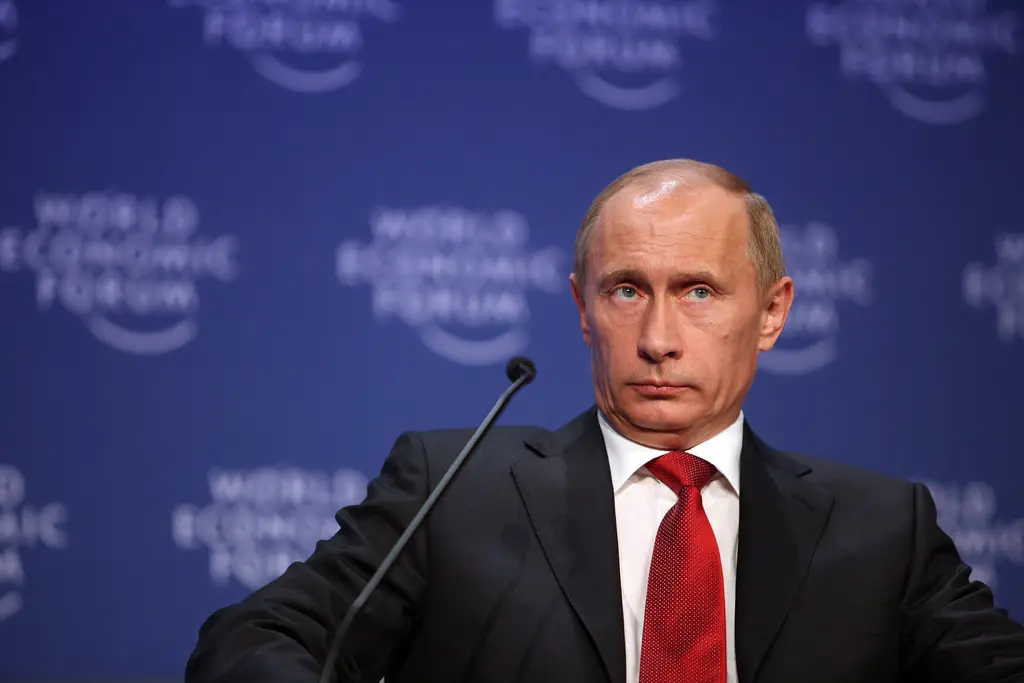
In a revealing interview with Tucker Carlson at the Kremlin, Russian President Vladimir Putin recounted a pivotal moment early in his presidency when he queried then U.S. President Bill Clinton about the possibility of Russia joining NATO. According to Putin, Clinton initially indicated that Russia’s inclusion in the defense alliance was conceivable, a sentiment that was retracted by the evening when Clinton, after consulting with his team, stated it was not feasible at the time.
This conversation, as described by Putin, underscores a complex period of post-Cold War relations and the evolving dynamics of international alliances. Putin, reflecting on the discussion, expressed a sense of betrayal, noting that despite Russia’s efforts to align more closely with Western standards of democracy and market economy following the Soviet Union’s dissolution, the anticipated integration into the “brotherly family of civilized nations” never materialized.
The narrative Putin presents paints a picture of missed opportunities and misunderstandings between Russia and the West. He lamented the expansion of NATO eastwards, contrary to what he claimed were assurances given to Russia, exacerbating tensions and diminishing trust.
Putin’s recounting of these events to Carlson not only highlights the geopolitical rifts that have since widened but also indicates Russia’s long-standing grievances with NATO’s policies. The interview, shedding light on Putin’s perspective, adds layers to the understanding of Russia’s current foreign policy stance and its historical context.
Furthermore, Putin’s comments on Elon Musk, recognizing him as a formidable force in global innovation, suggest a keen awareness of technological advancements and their potential geopolitical implications. Putin’s acknowledgment of Musk’s influence and the need for dialogue underscores a broader understanding of the interplay between technology, power, and international relations.
This dialogue between Putin and Carlson offers a rare glimpse into the Russian leader’s views on pivotal moments in recent history, revealing insights into the complexities of international diplomacy and the intricate dance of aligning national interests with global partnerships.