
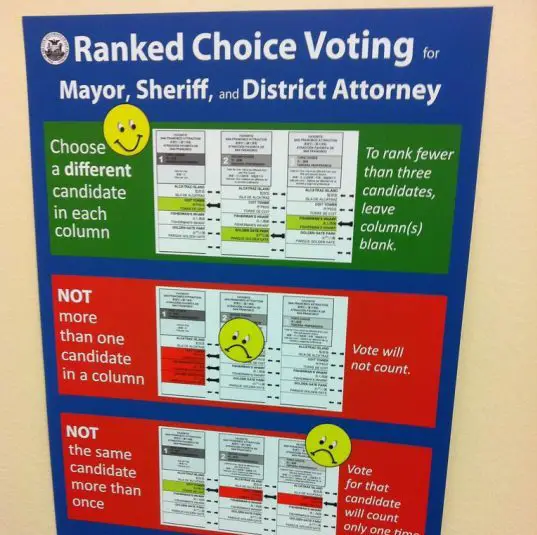
Ranked Choice Voting (RCV) is a voting method gaining traction across the United States, even as it continues to stir controversy regarding its effectiveness and fairness. This voting system is employed in various forms across the nation, with three states—Alaska, Hawaii, and Maine—implementing RCV on a statewide basis. Alaska and Maine use it for both federal and statewide elections, while Hawaii applies it in certain statewide elections.
Additionally, RCV has found a foothold in local elections within 13 states, although five states—Florida, Tennessee, South Dakota, Montana, and Idaho—have enacted measures banning its use. Despite these prohibitions, Virginia stands out as the only state where RCV is authorized by state law but remains unadopted.
The most common form of RCV, instant-runoff voting, has seen particular attention in states like Alaska. This system functions by initially counting only the first-choice votes. If no candidate secures a majority, the candidate with the fewest first-choice votes is eliminated, and their votes are redistributed based on the next preference indicated on those ballots. This process repeats until a candidate achieves the required 50% threshold, thereby ensuring that the winner enjoys broader support.
Experts predict that more states and localities might consider adopting RCV in the future, with Nevada, Idaho, Colorado, and Oregon potentially holding referendums to decide on its implementation. In Utah, a pilot program funded by the state is exploring RCV at the local level before making a state-wide decision.
One potential concern with RCV is “ballot exhaustion,” which occurs when voters do not rank all candidates, and their ballots become inactive in later rounds if their preferred candidates are eliminated. However, proponents argue that similar issues exist in the traditional voting system, where votes for withdrawn candidates or left blank are also not counted.
The partisan impact of RCV is debated, with some suggesting it could benefit parties by capturing second-choice votes from supporters of third-party candidates. While there’s no concrete evidence that RCV favors one party over another, it may enhance the electoral prospects of more moderate candidates who appeal to a wider range of voters.
Critics of RCV, such as Alaska congressional candidate Nick Begich, argue that the system can be manipulated by disciplined parties to their advantage, presenting a “disingenuous voting process.” However, proponents believe that RCV encourages a broader electoral appeal and could lead to more representative election outcomes.
As RCV continues to spread across various regions in the U.S., the debate over its implications for democracy and party politics is likely to persist, reflecting the evolving nature of American electoral practices.