
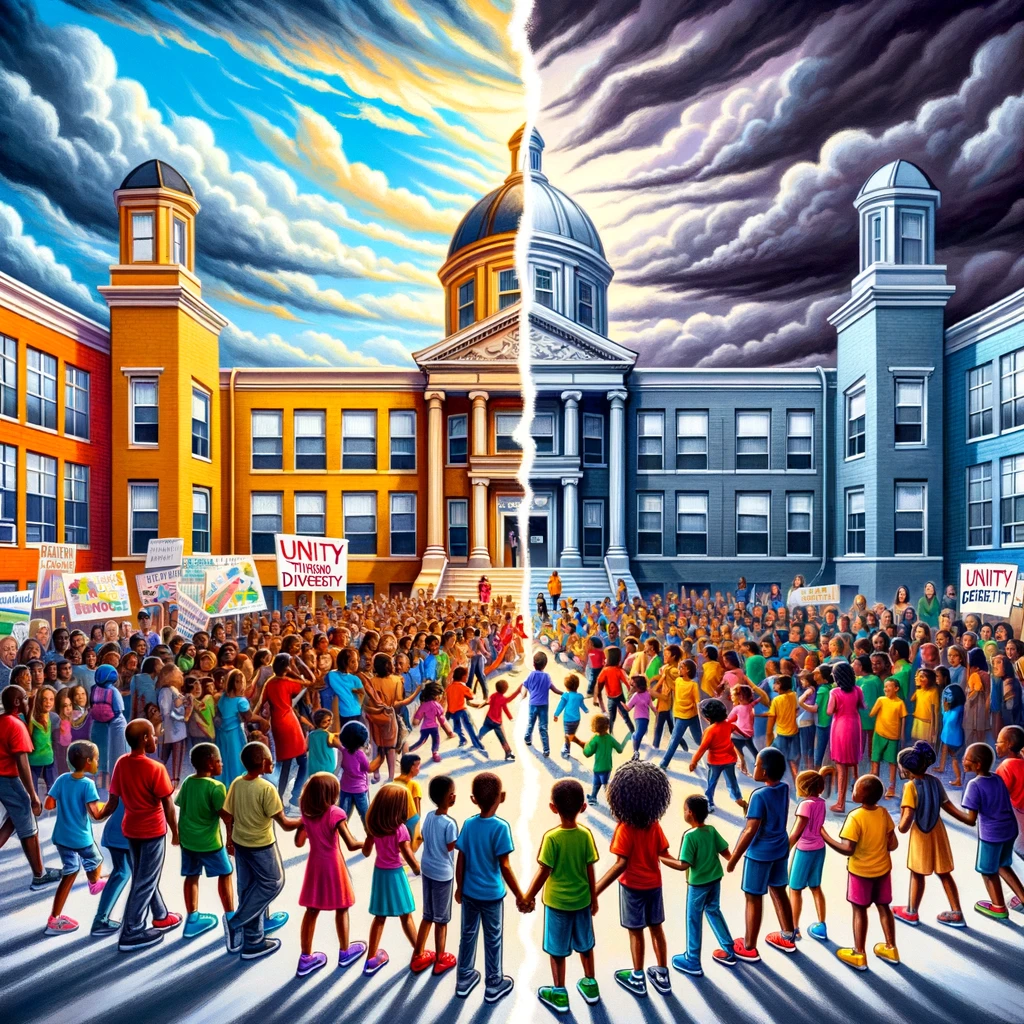
In Washington D.C., a proposal aimed at integrating two schools—one predominantly Black and the other predominantly White—has sparked a heated discussion among residents of a liberal neighborhood. The initiative seeks to address racial imbalances and promote diversity in the educational system, but it has been met with mixed reactions from the community.
The plan involves merging students from both schools, with the goal of creating a more balanced racial composition in classrooms. This move is seen as a step towards rectifying historical segregation and fostering an inclusive environment for students of all backgrounds. However, the proposal has ignited a contentious debate among parents and community members, revealing deep-seated concerns and differing viewpoints on the best approach to achieve integration.
Some community members are in favor of the plan, viewing it as a necessary and progressive step towards combating racial disparities in education. They argue that it will provide all students with equal opportunities and expose them to diverse perspectives, preparing them for a multicultural world.
Conversely, there are those who oppose the initiative, raising questions about its implementation and potential impact on the quality of education. Critics fear that the plan may lead to overcrowding, resource allocation issues, and a decline in academic standards. They also express concerns about the possible disruption to students’ learning environments and the loss of community identity.
The debate over this integration plan highlights the complexities of addressing racial inequality within the education system. It underscores the challenges of finding a solution that satisfies all stakeholders and effectively promotes diversity and inclusion. As discussions continue, the community remains divided, with each side advocating for what they believe is the best path forward for the students and the neighborhood at large.
This situation in Washington D.C. serves as a microcosm of the broader national conversation on race, education, and the pursuit of social justice. It reflects the ongoing struggle to reconcile ideals of equality and unity with the realities of societal divisions and historical injustices.