
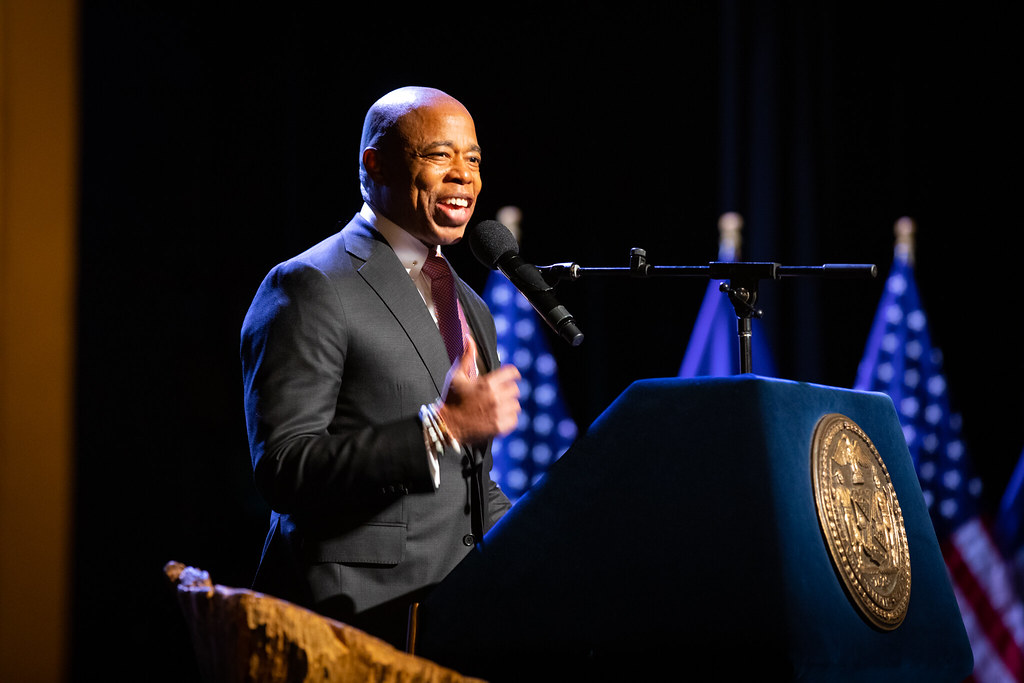
In a recent turn of events, New York City Mayor Eric Adams decided against a controversial plan to allocate an abandoned luxury condominium complex in Harlem to migrants, following a wave of public opposition. The plan was initially set to transform the upscale building on Adam Clayton Powell Jr. Boulevard into a shelter that could potentially accommodate migrants. This decision came to light only after residents noticed bed frames and mattresses being moved into the building, sparking community outrage.
The reversal of this plan was announced by Mayor Adams during an unexpected appearance at a meeting of the St. Nicholas House Resident Association, where he faced a crowd of residents expressing their fury over the city’s intentions. Mayor Adams stated, “I told the team, ‘Find out what’s going on here. We’re not moving folks into a brand-new building when you have long-term needs in a community. That’s not gonna happen.’” He assured attendees that migrants and asylum seekers would not be housed in the property.
Instead of serving as a shelter for migrants, the building will now provide transitional housing for New York City families experiencing homelessness, focusing on those with children. A spokesperson for the NYC Department of Social Services elaborated that the development was initially intended for market-rate condominiums but had been stalled and left vacant. The city aims to use this site as high-quality transitional housing in collaboration with an experienced not-for-profit provider to assist families in stabilizing their lives and moving into permanent housing.
The community’s strong reaction to the initial plan reflects broader concerns over affordable housing and the allocation of resources within New York City. Residents, including Harlem local Regina Smith and Leslie Johnson, voiced their frustrations over the lack of affordable housing options and the perceived disrespect from city officials. The outcry underscores the importance of community involvement in decisions affecting local neighborhoods and the need for transparency and dialogue in addressing housing and humanitarian challenges.
Mayor Adams’ decision to repurpose the luxury condos as transitional housing for homeless families rather than for migrants comes amidst ongoing discussions on the city’s approach to housing and support for vulnerable populations. It also highlights the delicate balance city officials must strike in responding to both local and broader societal needs.