
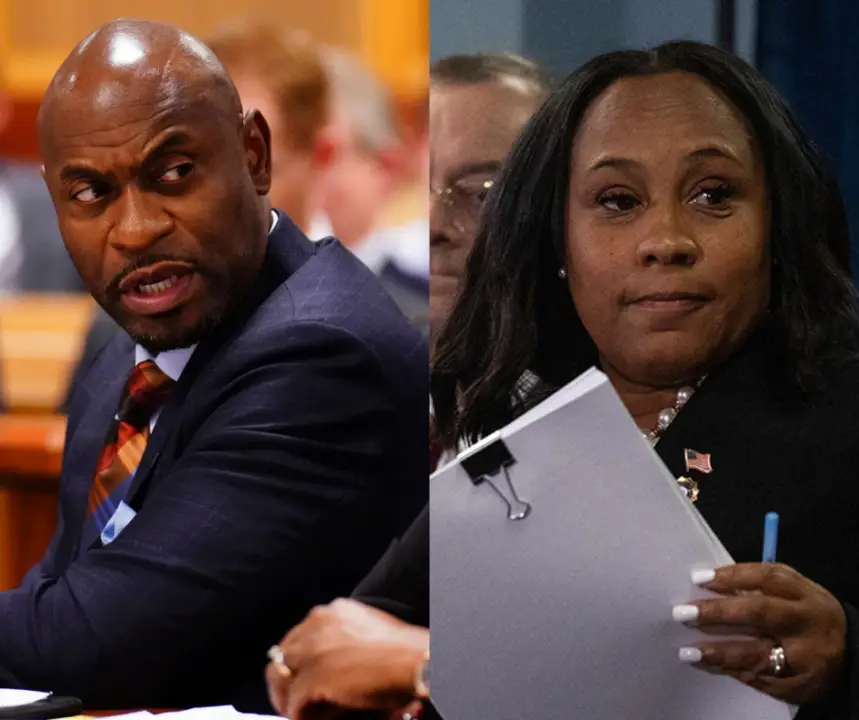
In the unfolding Georgia election-interference case involving former President Donald Trump, a significant legal battle is nearing its climax. The case has drawn attention to Fulton County District Attorney Fani Willis and her professional relationship with special prosecutor Nathan Wade. The controversy centers on whether Willis’s ties with Wade could potentially disqualify her from the case due to a conflict of interest.
An in-camera hearing is scheduled with Judge Scott McAfee, the defense’s key witness, Terrence Bradley, who was previously unable to provide comprehensive testimony due to objections regarding attorney-client privilege. Bradley’s relationship with Wade, as his divorce lawyer, is at the heart of the dispute. The upcoming hearing could reveal pivotal information that might influence the judge’s decision on whether Willis should be disqualified.
The central issue is whether Willis’s relationship with Wade appears to create a conflict of interest or if there is an actual conflict that warrants her disqualification. The prosecution argues that a concrete conflict of interest must be proven, whereas the defense contends that even the appearance of conflict is sufficient grounds for disqualification. Judge McAfee faces the challenging task of navigating through legal standards to make a decision that could significantly impact the case’s trajectory.
Georgia State University law professor Anthony Kreis noted the absence of clear precedent in this case, emphasizing the judge’s difficult position in determining the appropriate ethical standards to apply. The evidence presented so far suggests that the case against disqualifying the DA’s office might prevail if the judge opts for a standard requiring a concrete conflict of interest.
Regardless of the outcome, an appeal is highly likely, with defense attorneys poised to request a “certificate of review” that could escalate the matter to the Georgia Court of Appeals. This process underscores the legal complexities and high stakes involved in the case, which not only concerns Trump’s legal fate but also delves into broader questions of legal ethics and prosecutorial conduct.
As final arguments approach, the public and legal observers await a decision that will have significant implications for the case and the individuals involved. Judge McAfee’s ruling, expected to be detailed and supported by legal analysis, will mark a critical juncture in this high-profile legal saga.