
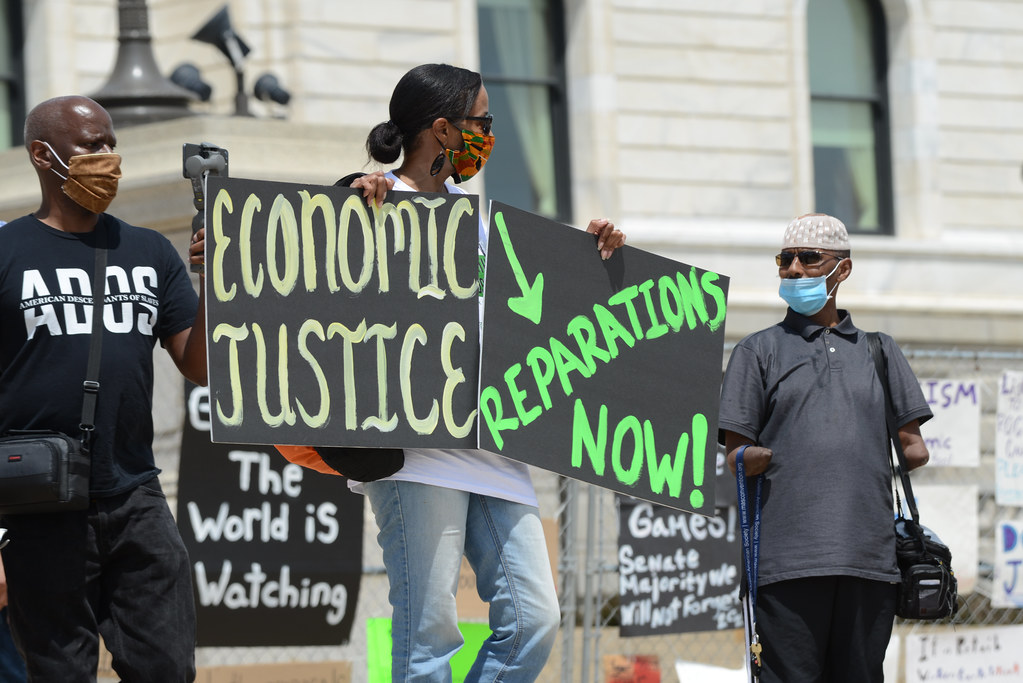
The conversation around reparations for slavery in New York has ignited a complex debate among Black residents over eligibility criteria. This discussion has gained momentum following Governor Kathy Hochul’s establishment of a commission to explore reparations for descendants of slaves. The commission, announced in December and with members named by February, is tasked with researching the most effective methods to offer reparations, yet it has not convened as of now.
A key point of contention lies in determining who qualifies for reparations. Some community members argue that reparations should be limited to direct descendants of slaves, pointing to similar decisions made by California’s reparations commission. Bertha Lewis, head of the Brooklyn-based Black Institute, challenges this narrow approach, emphasizing that the legacy of slavery and subsequent discrimination affects all Black people, making it difficult to single out direct descendants.
Mona Davids, founder of Little Africa News and a Black South African immigrant, presents a contrasting viewpoint. She argues that reparations should be exclusive to descendants of chattel slavery in the United States, distinguishing between the involuntary nature of slavery and the voluntary migration of Black citizens from Africa and the Caribbean. Davids also highlights the role of African countries and leaders in the historical slave trade, suggesting that the wealth of nations like Ghana and Nigeria complicates the narrative around reparations.
Governor Hochul’s stance on the issue remains broad, suggesting that even descendants of post-slavery immigrants might bear some responsibility in addressing the legacy of slavery. This inclusive perspective raises questions about the collective responsibility of American society to confront and amend the injustices of slavery, regardless of individual or familial involvement in the institution.
As New York’s reparations commission prepares to delve into these complex issues, the debate among Black New Yorkers reflects broader national conversations about reparations, historical accountability, and the path toward healing and justice for the descendants of slaves.