
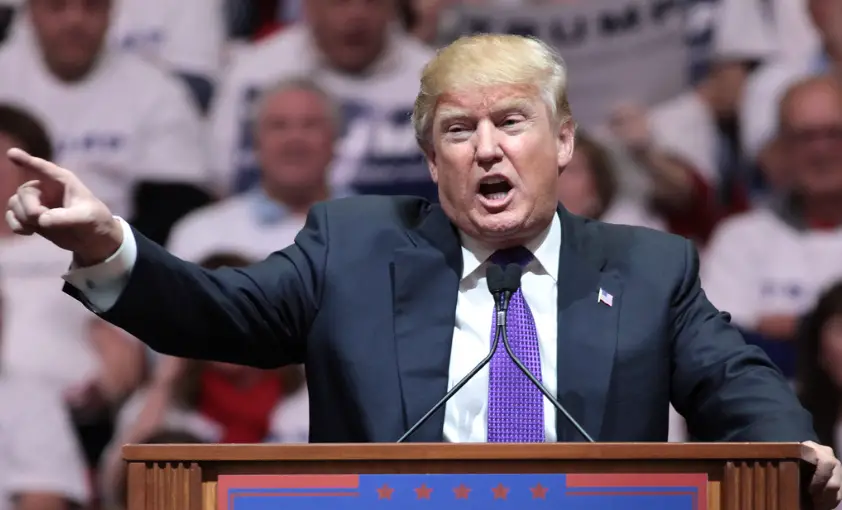
Former President Donald Trump faced a setback in his attempt to delay the commencement of his upcoming criminal trial related to alleged “hush money” payments, as a New York appeals court judge denied his eleventh-hour appeal for a postponement. The decision arrived following an emergency hearing, held a week before the trial was scheduled to start in Manhattan, a jurisdiction Trump’s legal team has sought to avoid due to its Democratic leanings.
The appeal included a request to suspend a gag order that currently prevents Trump from publicly criticizing witnesses and the family of the presiding judge. The Appellate Division, First Department of New York has yet to make a decision on this specific aspect of Trump’s appeal.
Trump’s legal maneuverings aimed at delaying the trial mirror previous strategies employed in his civil fraud trial, which ultimately did not yield the desired outcome. His lawyers had briefly succeeded in challenging a gag order in the fraud case, but the victory was short-lived.
The focus of Trump’s trial involves accusations that he unlawfully obscured payments made to Stormy Daniels, which were allegedly aimed at concealing an affair. Amid these legal battles, Trump’s attorneys have also sought to challenge the impartiality of Manhattan Supreme Court Justice Juan Merchan by requesting his recusal—a motion previously denied last August. Prosecutors have criticized these legal tactics as attempts to indefinitely stall the trial.
As the legal proceedings unfold, Trump’s team and the Manhattan District Attorney’s Office continue to engage in a contentious pre-trial phase, marked by disputes over venue, gag orders, and the judge’s potential biases. The anticipation builds for a ruling on the temporary suspension of the gag order, with implications for how the trial’s preliminary stages will progress.