
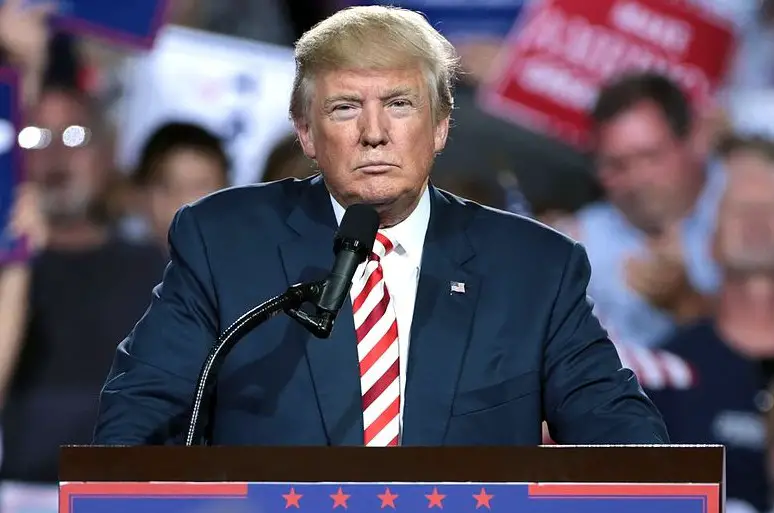
Former President Donald Trump has expressed sharp criticism over the security measures provided to Iranian President Ebrahim Raisi during his recent visit to the United Nations, accusing the leader of plotting assassination attempts while being shielded by international security forces. Trump described the situation as a “strange set of circumstances,” raising questions about the appropriateness of offering protection to a foreign leader accused of hostile intentions.
Speaking at a recent event, Trump highlighted concerns regarding Raisi’s presence at the UN, suggesting that the Iranian president should not be afforded such protections given his alleged involvement in plotting violence against American officials. “They’re guarding him while he’s planning assassinations—that’s a strange set of circumstances,” Trump remarked, pointing to tensions between Iran and the U.S. over security threats and accusations of state-sponsored terrorism.
The comments come amid ongoing scrutiny of Iran’s actions, with U.S. intelligence agencies closely monitoring threats linked to the regime. Trump’s remarks reflect the broader criticism of allowing leaders with controversial or adversarial positions on U.S. policy to participate in international forums like the United Nations, where diplomatic immunity and security protections are typically granted.
Raisi’s appearance at the UN has been met with protests and outrage from critics of the Iranian government, with some arguing that his administration’s actions, both domestically and internationally, should disqualify him from participating in global diplomatic events.
As the issue gains attention, Trump’s comments have sparked further debate about how the U.S. and its allies should handle interactions with foreign leaders accused of engaging in or supporting harmful activities, particularly in sensitive international settings like the United Nations.