
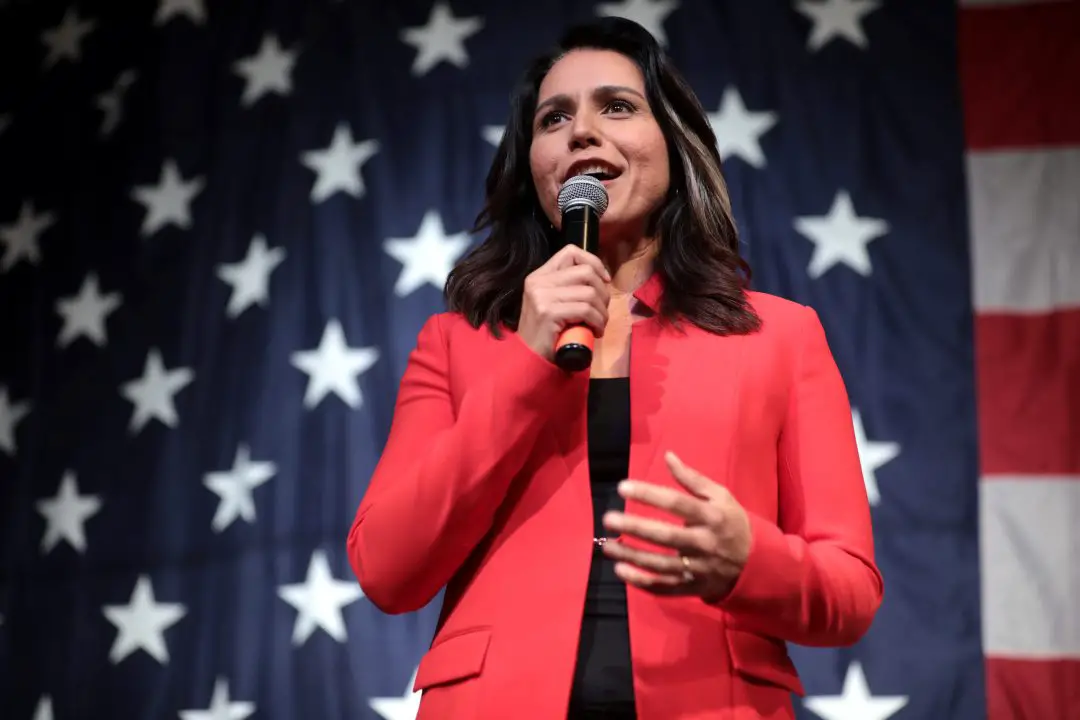
Former Democratic Representative Tulsi Gabbard faced backlash from members of her former party after President-elect Donald Trump nominated her to serve as the Director of National Intelligence (DNI). Prominent Democrats publicly criticized the appointment, expressing disappointment and raising concerns over Gabbard’s alignment with Trump.
Party insiders labeled the selection as a calculated move to further distance Gabbard from Democratic values. Critics highlighted her past critiques of party leadership and controversial stances on foreign policy, which have long set her apart from more traditional Democratic viewpoints. Several lawmakers described the nomination as reflective of Trump’s broader effort to select individuals perceived as breaking ranks with their prior political affiliations.
Supporters of the appointment, however, argued that Gabbard’s military background and willingness to challenge political norms positioned her well to lead the intelligence community. Trump’s decision was seen by some analysts as part of a broader strategy to diversify perspectives within his administration. Despite the criticism, Gabbard remains poised to take on the role, pending Senate confirmation. The nomination adds another chapter to the former Hawaii congresswoman’s unconventional political journey, which has often placed her at odds with her former party colleagues.