
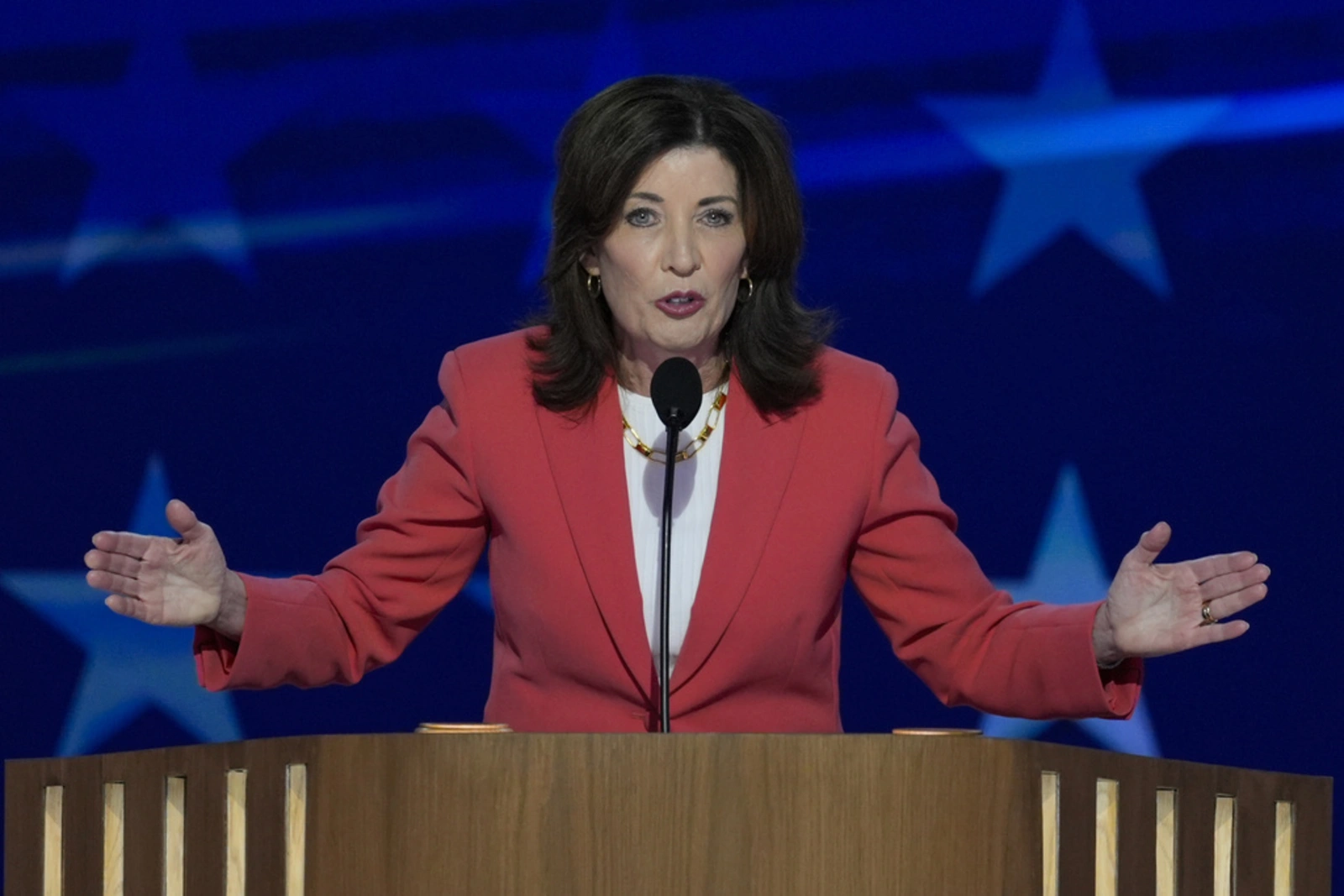
New York Governor Kathy Hochul has reignited the debate over the Electoral College, calling for its elimination while presiding over the state’s formal certification of electoral votes for Kamala Harris in the recent presidential election. During her remarks, Hochul emphasized her belief that the Electoral College is outdated and fails to reflect the principle of equal representation.
The governor argued that the current system unfairly amplifies the influence of smaller states, such as Wyoming, compared to more populous states like New York. She stated, “No offense to Wyoming, but their population should not carry disproportionate weight in national elections.”
Hochul’s comments come at a time when discussions about potential reforms to the U.S. electoral process have gained traction among some political leaders and advocacy groups. Proponents of abolishing the Electoral College argue that a popular vote system would ensure that every individual vote carries equal weight, regardless of geographic location. Opponents, however, warn that such a change could diminish the voices of less populous states and shift political power exclusively to urban centers.
New York, a state with a high number of electoral votes, has consistently leaned Democratic in presidential elections. Hochul’s remarks underline a broader frustration among leaders in populous states who feel their electoral power is diluted under the current system.
As the governor certified New York’s electoral votes, she praised the state’s commitment to democratic principles and reiterated her call for national electoral reform. While acknowledging that changes to the system would require significant effort, including a constitutional amendment, she urged lawmakers and citizens to seriously consider the benefits of a popular vote system.
Critics of Hochul’s position argue that the Electoral College was designed to balance the interests of both large and small states and remains a vital component of the nation’s federalist system. The debate is likely to continue as leaders across the political spectrum weigh the implications of such a fundamental change to the electoral process.