
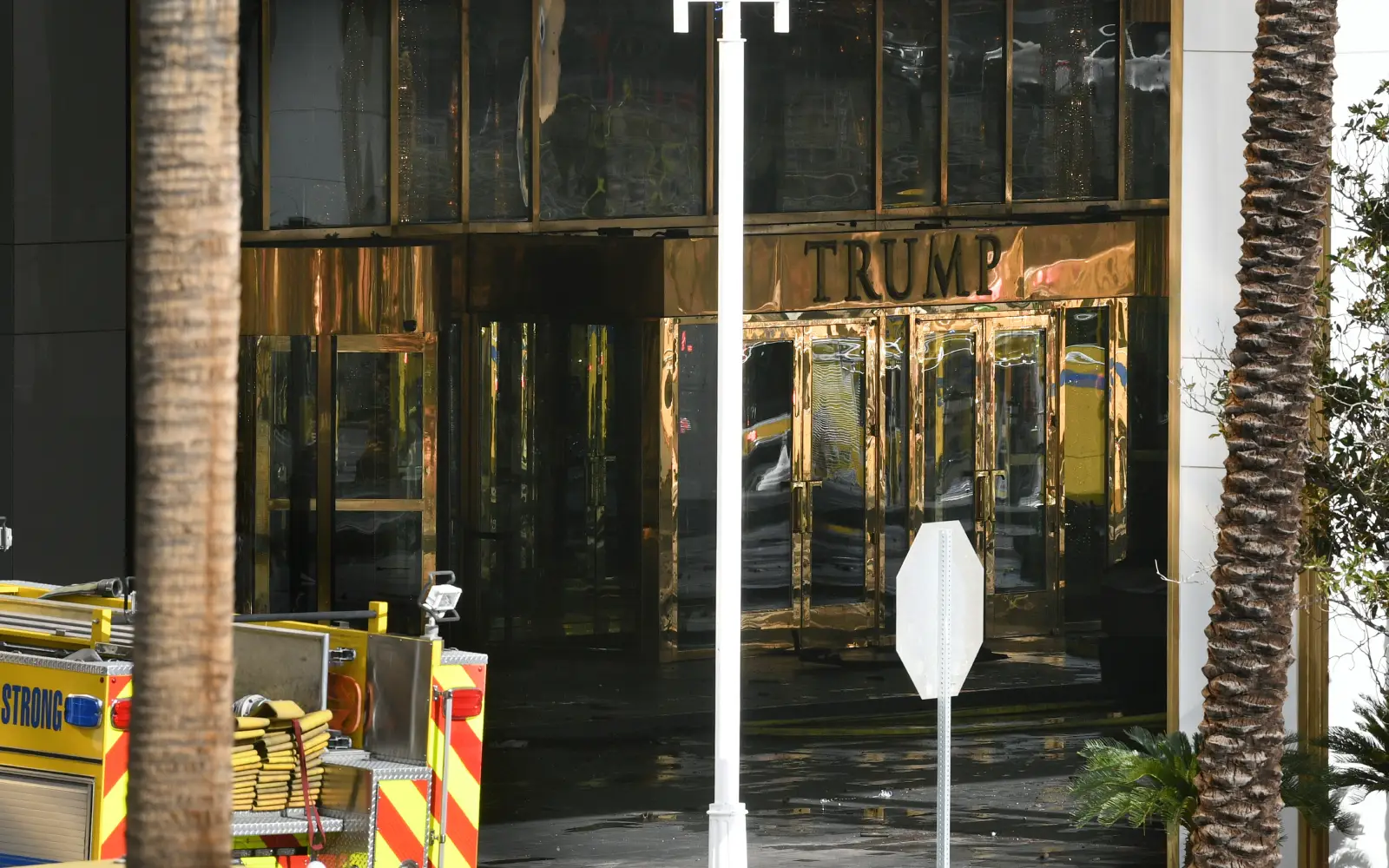
Authorities investigating the Las Vegas Cybertruck explosion at the Trump International Hotel have revealed new details about the suspect’s final moments. Matthew Livelsberger, a 42-year-old Army veteran, reportedly died from a self-inflicted gunshot wound just before the Tesla Cybertruck he was driving detonated outside the luxury hotel.
Police officials confirmed that Livelsberger shot himself in the head moments before the vehicle erupted in flames. The explosion caused significant damage to the immediate area but miraculously resulted in no other fatalities. Investigators are treating the incident as a potential act of domestic terrorism, though the suspect’s motives remain under investigation.
Livelsberger, a former Special Forces operative, had a background in overseeing drone operations during his military career. Authorities are examining whether his specialized skills played a role in planning the attack. The FBI and local law enforcement are working together to analyze evidence recovered from the scene, including the remains of the Cybertruck and devices found in Livelsberger’s possession.
Witnesses described the explosion as deafening, with flames and smoke engulfing the area. Evacuation orders were swiftly implemented, and the hotel and surrounding streets were cordoned off for hours as investigators combed through debris.
Details about Livelsberger’s personal life have also emerged. Friends and family described him as a man struggling with mental health challenges after his military service. His death has reignited discussions about the need for better support systems for veterans facing similar issues.
Authorities have assured the public that there is no ongoing threat related to the incident. However, heightened security measures have been implemented in Las Vegas as a precaution.
The case remains under investigation as officials work to determine the full scope of Livelsberger’s actions and whether he acted alone. This tragic event has prompted renewed calls for vigilance in addressing the root causes of such incidents and preventing future attacks.