
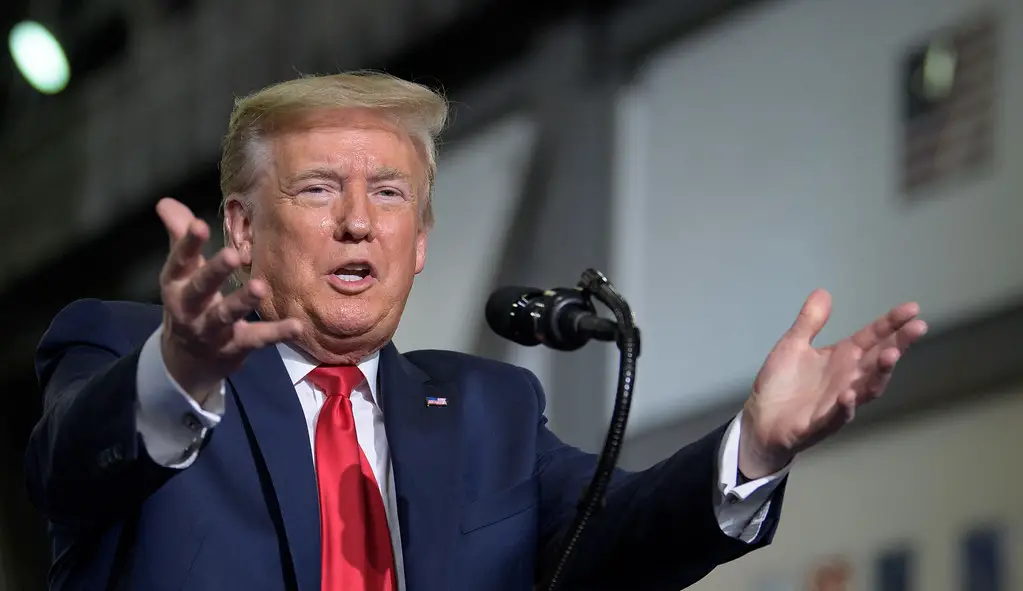
During a press briefing, President Donald Trump engaged in a heated exchange with CNN’s Kaitlan Collins after she inquired about his comments that connected the recent plane accident near Washington, D.C. to Democratic leadership and diversity, equity, and inclusion (DEI) policies. Trump dismissed her inquiry as “not very intelligent” and reiterated his position on the matter, which resulted in a tense exchange.
Collins inquired as to whether there was any direct evidence to substantiate Trump’s assertion that DEI’s recruiting practices had jeopardized aviation safety. Trump maintained his claim, contending that the prioritization of diversity over qualifications in critical sectors, such as aviation and air traffic control, poses a threat to public safety. He emphasized that recruiting should be conducted solely on the basis of merit, rather than initiatives that are intended to meet diversity quotas.
The confrontation between Trump and Collins rapidly garnered attention, with supporters commending the president for his unwavering stance, while critics accused him of exploiting the tragedy to advance an anti-DEI agenda without any factual support. The White House has consistently argued that the reversal of DEI policies in federal agencies is a critical measure for ensuring proficiency in critical disciplines.
The final report on the cause of the crash has not yet been released by the investigators. However, aviation authorities have advised against drawing conclusions until all evidence has been reviewed. In spite of this, Trump’s statements have reignited the debate regarding DEI’s role in government and private sector hiring, which has sparked broader discussions about workplace diversity policies and their influence on safety and efficiency.
The ongoing political divide over DEI policies is underscored by the conflict between Trump and Collins as the investigation continues. Both parties remain steadfast in their assessments of the policies’ efficacy and potential repercussions.