
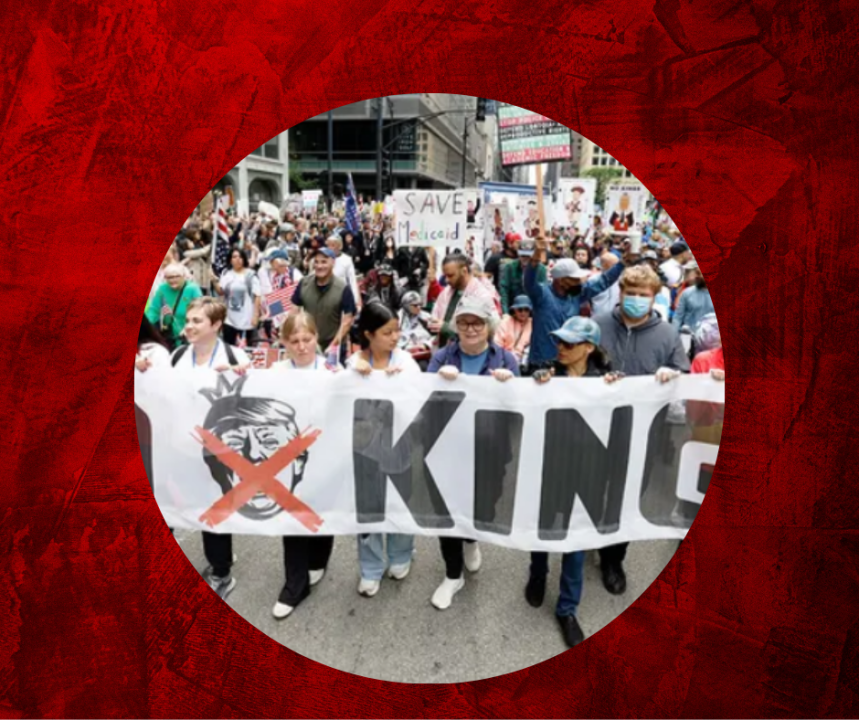
Nationwide “No Kings” rallies, held in over 2,600 locations and attracting millions, were increasingly marked by aggressive imagery and violent language, raising concerns amid what were otherwise large-scale demonstrations against perceived authoritarianism.
Videos captured during the events show protestors brandishing signs equating federal immigration agents with fascists and, in Chicago, a man publicly called for ICE agents to be “shot” and “wiped out,” prompting demands for a Justice Department investigation.
In San Antonio, councilwoman Misty Spears condemned widespread graffiti tied to the protests—slogans like “No King” and “Trump Sucks,” painted on churches and private property—calling the vandalism “divisive” and harmful to civic unity.
Organizers, many affiliated with groups like the ACLU and MoveOn, emphasized that the movement remains committed to non-violence and that these flashes of misconduct emerged without central approval. Nonetheless, the presence of extremist chat groups and online platforms advocating violence around the protests—including extremist calls for “mass deportation” of immigrants—has drawn the attention of the Department of Homeland Security.
While the majority of the rallies remained peaceful and centered on issues such as housing, union rights and democracy, the simultaneous display of violent symbolism and threats has amplified debate over protest boundaries, extremist influence, and how authorities respond to public demonstrations.