
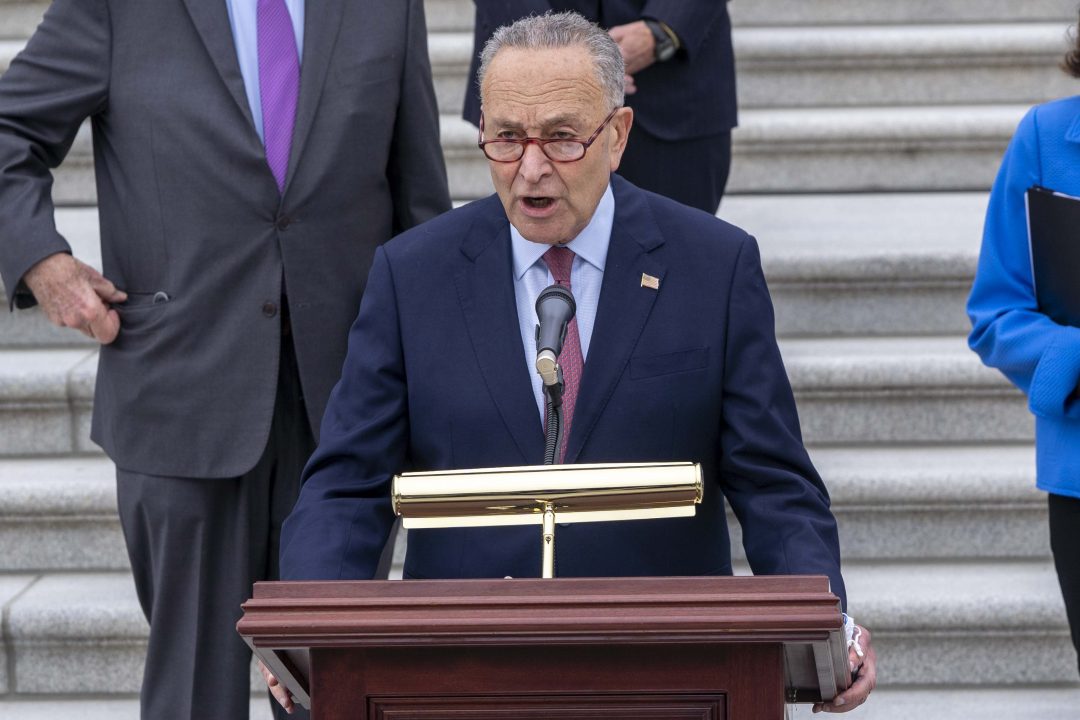
Senate Democratic leader Chuck Schumer is facing sharp criticism from political opponents after characterizing a Republican-backed voter ID proposal as akin to Jim Crow-era laws, even as earlier allegations about the measure have been contested.
Schumer’s comment came in the context of ongoing negotiations over a government funding package, in which GOP lawmakers had sought to attach enhanced voter identification requirements. He argued that the proposed rules could disproportionately affect certain groups of voters and framed them as a throwback to discriminatory practices in U.S. history.
Schumer’s statement has drawn rebukes from Republicans, who say his comparison is unwarranted and politically charged. Critics contend that the voter ID provisions are aimed at strengthening election integrity and do not mirror historical policies that enforced racial discrimination at the ballot box.
Supporters of Schumer’s characterization argue that stricter identification rules can create barriers to participation for some populations and believe highlighting those concerns is an important part of the broader debate over voting rights. Opponents counter that modern voter ID laws include safeguards and are not comparable to past Jim Crow statutes.
The dispute highlights ongoing partisan disagreement over election policy, particularly as lawmakers work to advance or oppose provisions tied to major legislative packages. As controversy mounts, the conversation over voter ID rules and their potential impacts is expected to remain a point of contention in Washington.