
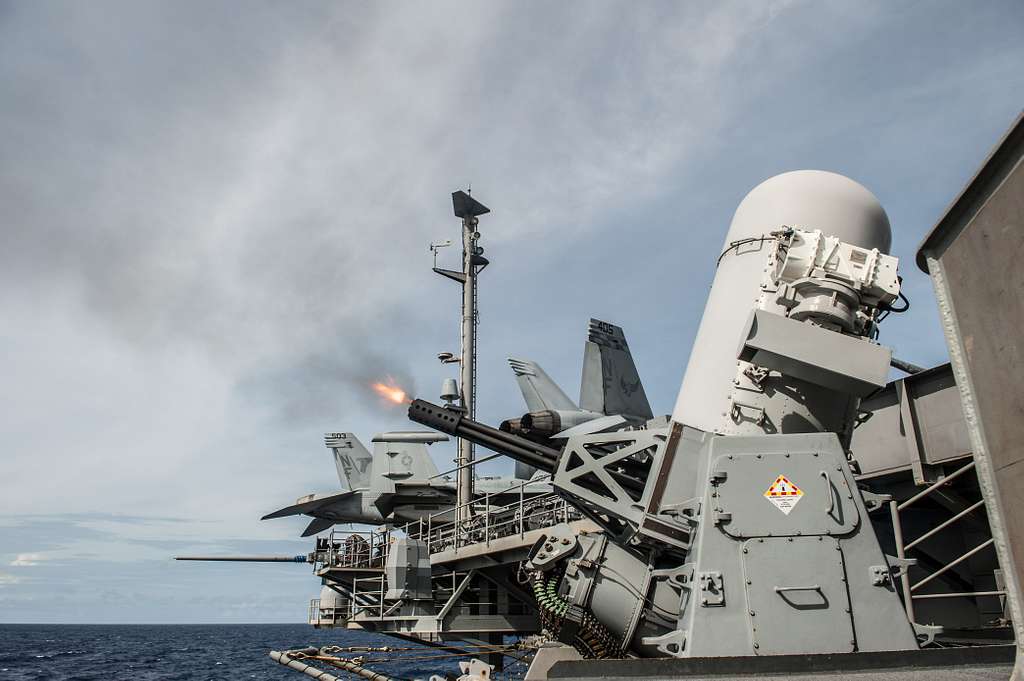
In a significant military action, the U.S. Navy deployed anti-ship ballistic missiles to counteract Iran-backed Houthi missiles in the Red Sea. This operation marks a notable escalation in the region’s tensions, as reported by a senior defense official to Fox News.
The Navy’s engagement involved targeting three ballistic missiles supplied to Yemen’s Houthi rebels by Iran. This event is particularly noteworthy as it was the first instance of the Navy intercepting an incoming ballistic missile using an anti-ship ballistic missile system.
During a 12-hour period, naval forces, including the USS Laboon and F/A-18 Super Hornets from the Eisenhower Carrier Strike Group, successfully neutralized 12 one-way attack drones, three anti-ship ballistic missiles, and two land attack missiles launched by the Houthis. The U.S. Central Command confirmed these details.
Since October 17, nearly 100 drones operated by the Houthis have been intercepted. The group’s aggressive actions have targeted over 21 international vessels in the region, significantly disrupting global shipping routes.
The recent increase in attacks in the Red Sea follows Israel’s military offensive against Hamas in the Gaza Strip. Major shipping companies, including the Denmark-based Maersk, have started rerouting their vessels around Africa and the Cape of Good Hope to avoid the Red Sea, leading to additional costs and delays.
One such incident involved the Swiss-based Mediterranean Shipping Co. (MSC), whose container ship MSC United VIII was attacked while traveling from King Abdullah Port, Saudi Arabia, to Karachi, Pakistan. MSC confirmed that all crew members were safe and that the vessel was undergoing a thorough assessment.
This naval engagement occurred in the wake of an attack on Erbil Air Base in Iraq on Christmas Day, which injured three U.S. service members. One of the injured was reported to be in critical condition. In response, U.S. forces conducted airstrikes on facilities used by Kataib Hezbollah and affiliated groups in Iraq, as stated by Secretary of Defense Lloyd J. Austin.
The situation in the Red Sea remains tense, with the U.S. Navy’s recent actions underscoring the ongoing challenges in maintaining security and stability in the region.