
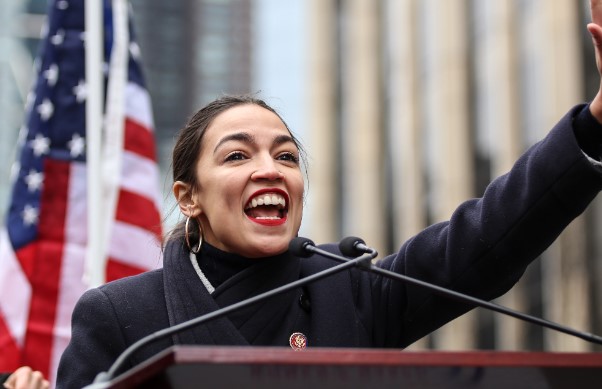
Representative Alexandria Ocasio-Cortez has formally announced her bid for a prominent leadership role on the House Oversight Committee, signaling her intent to take on a more significant position within the Democratic Party’s ranks. The move highlights her growing influence and ambitions in shaping key legislative and investigative priorities.
The Oversight Committee plays a critical role in holding government agencies accountable and conducting high-profile investigations into issues affecting the nation. If successful in her bid, Ocasio-Cortez, widely known as AOC, would bring her progressive agenda and strong advocacy for government transparency to the forefront of the committee’s operations.
Her announcement has garnered support from fellow progressive lawmakers and advocacy groups, who see her as a champion for climate action, economic equity, and social justice. They argue that her leadership on the committee would ensure robust oversight and a focus on issues often underrepresented in traditional political discourse.
However, her bid has also sparked criticism from opponents who question whether her progressive platform aligns with the broader objectives of the Democratic Party’s leadership. Critics argue that her outspoken style and polarizing views could create challenges in achieving bipartisan cooperation on the committee.
AOC’s push for the leadership role underscores a broader generational shift within the Democratic Party, as younger members seek to assert their influence in shaping the party’s direction. Her track record in Congress, including her vocal opposition to corporate influence and her advocacy for marginalized communities, positions her as a formidable contender.
As deliberations over committee assignments continue, Ocasio-Cortez’s candidacy is expected to ignite debate within the Democratic caucus about the future of the party’s legislative priorities and its approach to oversight in a divided government. The outcome of her bid could have significant implications for the committee’s direction and the broader political landscape.