
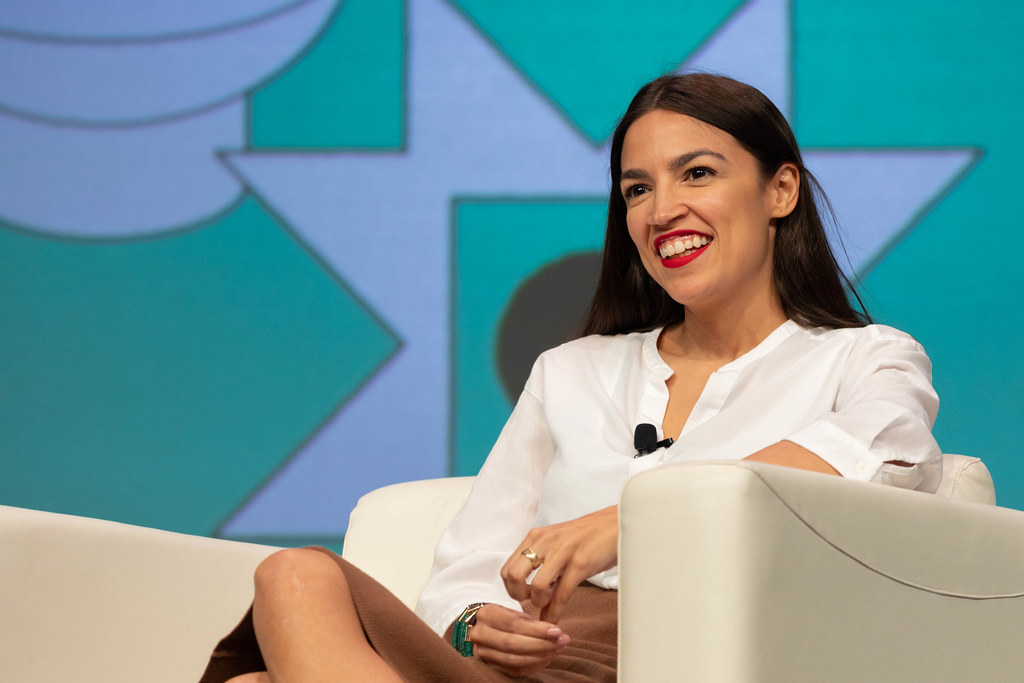
Representative Alexandria Ocasio-Cortez recently expressed her bewilderment at voters who chose to split their ballots, supporting both her re-election in New York while also casting votes for Donald Trump in the presidential race. The phenomenon, which raised questions about voter motivations and shifting political dynamics, was highlighted by the congresswoman as emblematic of a complex and evolving electorate.
Ocasio-Cortez, a prominent progressive figure, sought to understand the reasoning behind the apparent contradiction in voting preferences. She remarked that such decisions demonstrate a mix of ideological leanings that defy traditional party lines. Voter interviews revealed a variety of reasons behind this split-ticket behavior, ranging from economic concerns and dissatisfaction with national Democratic strategies to localized support for Ocasio-Cortez’s work within her district.
Some voters cited their discontent with the current state of national politics and their preference for Trump’s economic policies as a driving factor for their presidential choice. At the same time, they viewed Ocasio-Cortez’s advocacy on issues like housing and healthcare as beneficial to their community, illustrating a nuanced approach to their selections at the ballot box.
Political analysts have noted that such split-ticket voting underscores a complex voter sentiment that cannot be solely categorized by party allegiance. Ocasio-Cortez’s reflection on the matter has prompted further discussion on the challenges facing both major parties in addressing the diverse priorities of their constituents. The congresswoman’s focus remains on understanding and engaging with her constituents’ needs amid a shifting political landscape.