
Mayor of Boston Reveals Strategy to Handle Homeless Encampment Issues
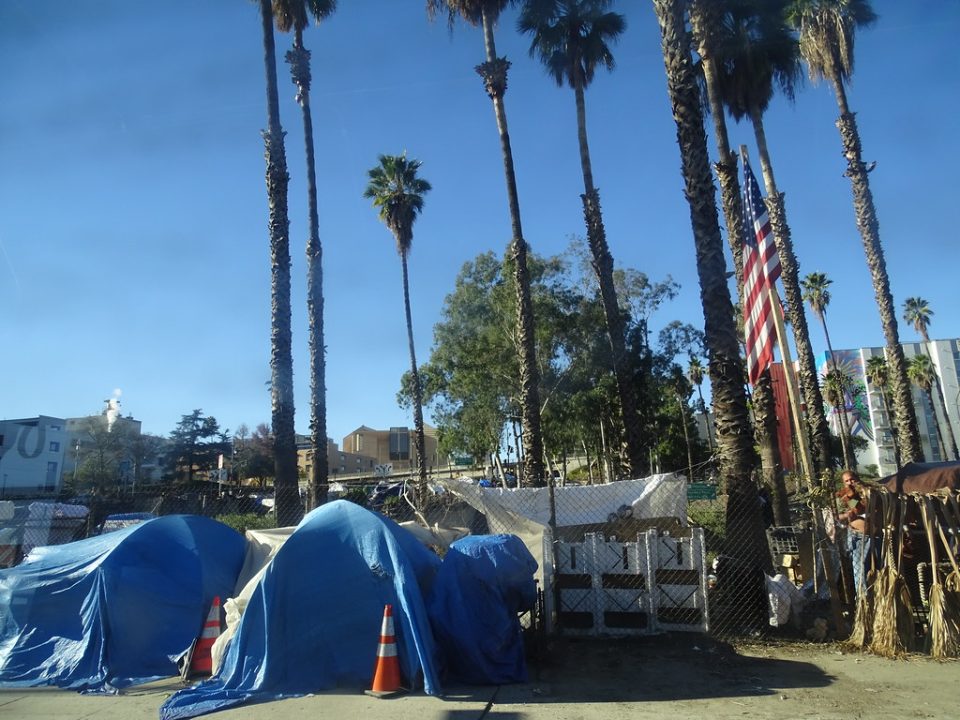
Michelle Wu, the recently elected Democratic mayor of Boston, has taken a major step by launching a comprehensive plan to address the issues raised by a tent city for the homeless that is situated right in the middle of the city. The Mayor’s office has decided to implement a new legislation that will allow police to remove the improvised encampment, which is known for providing refuge for drug use and other illegal acts, starting on November 1.
Known as “Methadone Mile,” the encampment is located at the intersection of Melnea Cass Boulevard and Massachusetts Avenue in South Boston. It has been home to tents and tarp-covered structures for a long time, acting as a temporary haven for those struggling with homelessness and substance abuse. Regrettably, criminal activity has also been a problem in this neighborhood, therefore Mayor Wu’s administration has to move quickly to address the issue.
Remarkably, the administration of Mayor Wu has conveyed the new regulation to the tent city’s occupants in a number of languages, highlighting the stoppage of the construction of new tents within the settlement. A coordinated group of social workers and law enforcement officers will be sent out to interact with immigrants and enlighten them about the new policy in order to ease this transition.
While acknowledging the complexity of the issues surrounding mental health, homelessness, and the ongoing opioid crisis, Mayor Wu voiced confidence in Boston’s capacity to provide the required resources to those in need. She mentioned her continued attempts to link the 80–90 persons who are currently residing at the campsite with social services each day—a decrease from the 200 people per day that had previously been reported.
Wu’s approach to solving the problem develops in three main phases. First, it gives authorities the authority to tear down tents and tarp buildings; next, it places a focus on getting impacted people shelter and other necessities. There will be temporary housing available, and camping inside the city is no longer allowed. With this strategy, the combined issues of drug usage and other criminal activity within the encampment are attempted to be addressed.
At Mass and Cass, City Council President Ed Flynn emphasized the necessity of upholding current regulations, which include the arrest and punishment of lawbreakers. He also voiced support for a “zero tolerance” policy.
Mayor Wu’s third plan element is stepping up police presence in the neighborhood to fight crime and protect locals. Commissioner of Police Michael Cox stressed the department’s resolve to stop people with bad intentions from preying on the weaker members of society.
This rule goes into effect at the same time as Massachusetts is still dealing with a different crisis: an increase of migrant families seeking refuge, partially as a result of an antiquated “right-to-shelter law.” This statute requires the state to provide taxpayer-funded emergency housing for migratory families. By the end of October, the state plans to have accommodated 7,500 families, or roughly 24,000 people, at its shelter capacity.
Governor Maura Healy listed a number of reasons that have contributed to the crisis of migrant shelters, including the expiration of COVID-era programs, federal regulations around immigration and work permits, and a lack of affordable housing. To alleviate the pressure on the shelter system and the rise of tent cities, Republican state representative Peter Durant has suggested an amendment that would make it necessary for recipients of the “right-to-shelter” to be lawfully resident for at least three years. Many of the homeless people who are fleeing the “Methadone Mile” encampment might be eligible for refuge under Durant’s proposal.
Mayor Wu’s all-encompassing strategy demonstrates her dedication to tackling the problems caused by addiction and homelessness in Boston while simultaneously addressing the larger social and legal concerns related to providing housing and support for those in need. The execution of these measures represents a noteworthy advancement in the continuous endeavors to enhance the welfare of the city’s most susceptible citizens.