
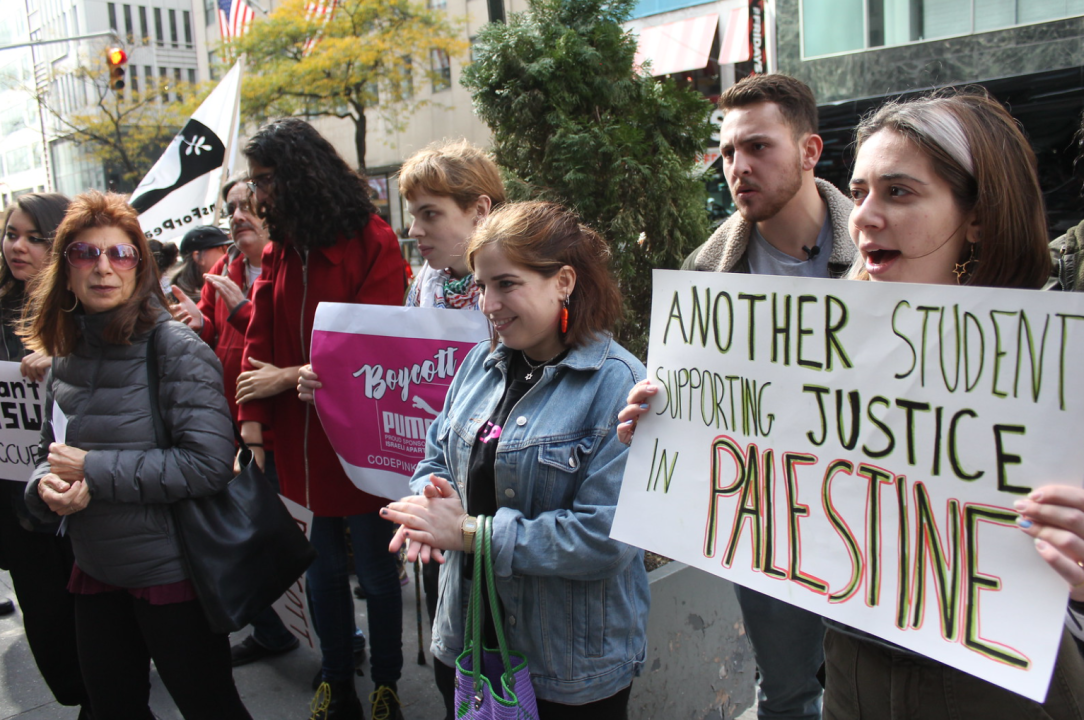
Brandeis University Withdraws Recognition of Students for Justice in Palestine
Brandeis University has announced the revocation of recognition for the Students for Justice in Palestine (SJP) chapter on its campus. The decision came to light on Monday when the Brandeis SJP canceled a planned event named “Vigil for Palestine” through an announcement on its Instagram account, citing unjust de-charting as the reason.
In a heartfelt Instagram post, the Brandeis SJP expressed its disappointment at being unjustly de-charted by the university. The group accused Brandeis University, an institution that strongly values social justice, of attempting to stifle their freedom of expression. They also thanked their supporters and encouraged those in need of assistance to reach out to them. The post concluded with the message, “From river to sea, Palestine will be free. Until liberation, Students for Justice in Palestine.”
The decision to derecognize Brandeis SJP was conveyed in a letter, which the Jewish Insider reported was not made lightly. As a result of this decision, the group will no longer receive funding, have the ability to conduct campus events, or utilize the Brandeis name. The letter stated that the National SJP had encouraged its chapters to support Hamas, which seeks the violent destruction of Israel and the Jewish people. These actions were deemed incompatible with the university’s principles, leading to the derecognition of the Brandeis chapter of the National SJP.
The letter also clarified that any students engaging in conduct supporting Hamas or promoting violence, whether as individuals or through organized activities, would be in violation of the university’s student code of conduct. Brandeis University spokeswoman Julie Jette emphasized that the removal of recognition was unrelated to the canceled vigil and explained that the National SJP’s activities were inconsistent with the university’s commitment to free speech. She encouraged students to express their support for Palestinians within the framework of their rights and responsibilities.
To further elucidate the university’s stance on speech used to threaten or harass, Jette pointed to an op-ed by Brandeis University President Ronald Liebowitz published in the Boston Globe on Monday. In the op-ed, Liebowitz asserted that student organizations engaging in protests calling for violence or the annihilation of the Jewish State should lose their privileges. He emphasized that Brandeis would uphold free speech within appropriate boundaries, ensuring that groups affiliated with the university, including the use of its name, would lose their affiliations and privileges when promoting hate speech.
In addition to the policy announcement, Liebowitz revealed that Brandeis University would pursue closer ties with Israeli academic and cultural institutions, advocating for other universities to follow suit. Brandeis University, founded in 1948 by the American Jewish community as a nonsectarian research institution, was named after the first Jewish Justice of the U.S. Supreme Court, Louis Brandeis.
Rabbi Seth Winberg, the executive director of Brandeis Hillel, had previously addressed the Jewish student group regarding the “Vigil for Palestine” event, offering support and discouraging engagement with the SJP. In response to Brandeis University’s decision, Winberg praised it, stating that it unequivocally demonstrated that supporting terrorism and creating a hostile campus environment would have consequences. He stressed the importance of campuses being safe places for all students, including Jewish, Muslim, Israeli, and Palestinian students.
Meanwhile, the Students for Justice in Palestine expressed their condemnation of Brandeis University’s decision, stating that it did not represent the broader Brandeis community, which advocates for free speech and an immediate ceasefire.
This development at Brandeis University aligns with a broader national conversation about the recognition and support of student organizations involved in contentious political issues, particularly those with connections to international conflicts, such as the Israeli-Palestinian conflict.