
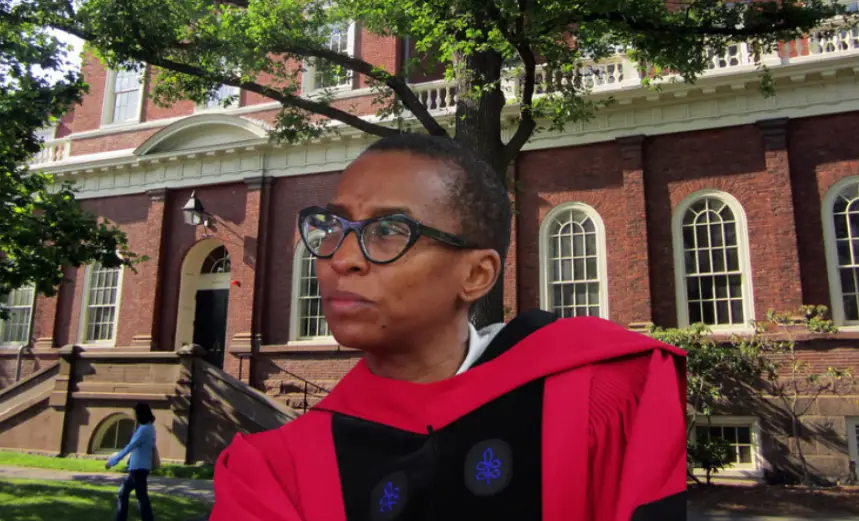
The academic world has been rocked by the recent resignation of Claudine Gay, the first Black president of Harvard University, amid a whirlwind of controversy and allegations. The decision by Gay to leave her esteemed position has ignited intense discussions, with some attributing her resignation to racial discrimination.
Throughout her presidency, Gay faced numerous challenges, including accusations of plagiarism and criticism over her approach to addressing antisemitism on campus. Her decision to resign was announced in a poignant letter to the Harvard community, where she expressed her disappointment over the divisive climate and the diminishing sense of trust and solidarity at the university.
The response to Gay’s resignation was immediate and sharply divided. Congressman Jamaal Bowman, a Democrat from New York, was among the first to comment, suggesting that racial bias played a role in her departure. This sentiment was reflected in the reactions of several media figures. Nikole Hannah-Jones of The New York Times Magazine and creator of the “1619 Project,” perceived Gay’s resignation as a warning sign for the future of academic freedom and racial justice initiatives. Similarly, Mara Gay of The New York Times, speaking on MSNBC, interpreted the resignation as an undermining of diversity and multiculturalism, hinting at racial motivations behind the criticisms of Gay.
Reverend Al Sharpton, a prominent civil rights advocate, expressed his view that Gay’s departure represented a setback for diversity, equity, and inclusion. His opinion, as reported by Politico, was that these core values were under threat following her resignation.
Academic professionals also voiced their opinions. Ibram X. Kendi, a Boston University professor, criticized what he viewed as racially motivated attacks against Black leaders. Roopika Risam, an assistant professor at Dartmouth, and Eric Deggans, an adjunct professor at Duke University, echoed these concerns, stressing the intimidation faced and the potential repercussions for diversity at Harvard.
Gay’s resignation gained further traction following her congressional testimony on an attack on Israel and the handling of antisemitism on campus. This, along with the increasing plagiarism allegations, intensified the calls for her to step down. Reports indicated that a significant portion of her publications were being scrutinized for plagiarism.
In the aftermath of her resignation, Gay is expected to continue receiving a substantial salary in a new faculty role. This ongoing situation has sparked debates and highlighted the unique challenges encountered by leaders in higher education, especially those from minority groups.