
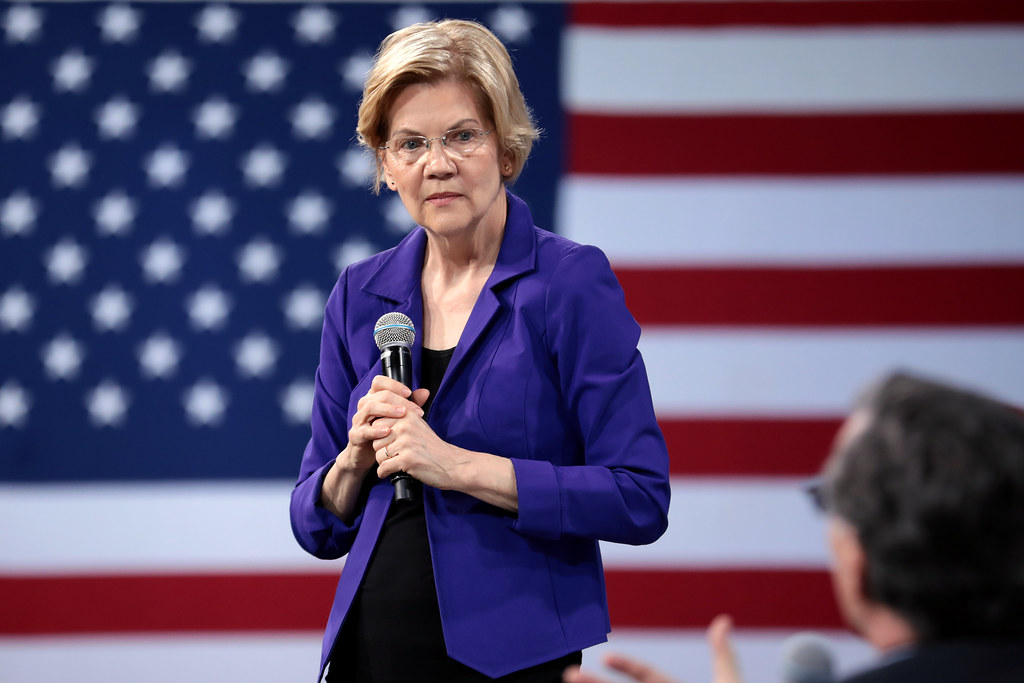
Senator Elizabeth Warren found herself in a tense debate with a CNBC host regarding Vice President Kamala Harris’s recent proposal for implementing price controls to combat rising inflation. The exchange highlighted the stark differences in economic philosophies as Warren defended the administration’s approach, while the host argued that such measures could backfire.
During the interview, the CNBC host questioned the effectiveness of price controls, labeling the strategy as a “fool’s errand” that historically leads to market distortions and shortages. The host cited examples from the past where price controls resulted in unintended consequences, challenging Warren to explain how Harris’s plan would avoid similar pitfalls.
Warren, a long-time advocate for increased government intervention in markets, pushed back against the criticism. She argued that price controls are necessary to protect consumers from corporate greed, which she claims is driving up prices in essential sectors like housing, healthcare, and energy. “This isn’t about stifling the market,” Warren said. “It’s about ensuring that working families aren’t being squeezed by skyrocketing costs while big corporations rake in record profits.”
The exchange became increasingly heated as the host pressed Warren on the potential downsides of the proposal, including the risk of reduced supply and diminished investment. Warren countered by emphasizing the need for bold action to address what she described as a crisis for millions of Americans struggling with the cost of living.
“Doing nothing is not an option,” Warren stated firmly. “We need to put the interests of everyday people ahead of corporate bottom lines. The Vice President’s plan is a step in the right direction.”
Despite Warren’s defense, the host remained skeptical, questioning whether the proposed price controls could lead to more harm than good. The back-and-forth underscored the deep ideological divide over how to tackle inflation, a major issue facing the country as the 2024 election approaches.
The clash also reflects the broader debate within the Democratic Party about the role of government in managing the economy. While progressive figures like Warren support aggressive measures to rein in corporate power, more moderate voices within the party express caution about the potential economic fallout from such policies.
As the conversation concluded, it was clear that the disagreement over price controls is far from resolved. With inflation continuing to be a central concern for voters, the effectiveness of Harris’s proposal—and the broader economic strategies of the Biden administration—will likely remain a contentious issue in the months ahead.