
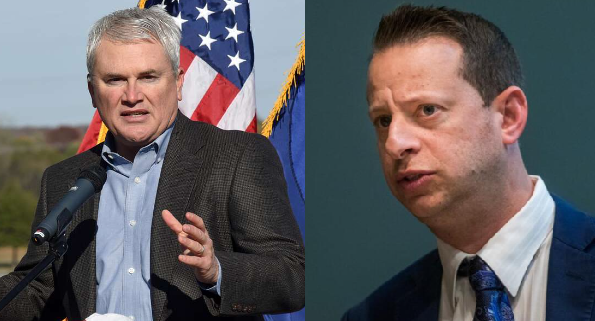
A House Oversight Committee hearing on Tuesday escalated into a fierce verbal confrontation between Democratic Representative Jared Moskowitz of Florida and Republican Representative James Comer of Kentucky. The dispute centered around allegations of personal financial improprieties.
During the hearing, Moskowitz referred to Comer, the committee chair, and his earlier statement about the Biden administration. Moskowitz offered to yield some of his time to Comer to address recent allegations suggesting Comer had provided a loan to a family member, which Comer has denied.
Comer accepted the offer and vehemently refuted the allegations. He clarified that he had purchased farmland from his brother, who wanted to keep it within the family, and denied any involvement in a shell company, calling such claims baseless and targeting those who believed the report as “dumb and financially illiterate.”
The exchange intensified as Moskowitz attempted to reclaim his allotted time, leading to a heated back-and-forth. Comer accused Moskowitz of disseminating “misinformation,” while Moskowitz highlighted inconsistencies in Comer’s stance on financial dealings.
Comer defended his financial actions, inviting scrutiny and comparing them to the Biden family’s alleged transactions. Moskowitz suggested Comer should be subject to a deposition, to which Comer responded with a willingness to testify alongside the Biden family.
The debate reached a crescendo with Moskowitz questioning the legality of Comer’s actions and Comer dismissing Moskowitz’s credibility. As the time allocated to Moskowitz expired, the hearing continued, but the exchange left a lasting impression.
In statements to Fox News Digital, a spokesperson for Comer accused Moskowitz of spreading disinformation to deflect from the Biden family’s corruption. Comer maintained his commitment to investigating these issues. In contrast, Moskowitz suggested Comer needed a mental health day, declining to comment further.
The contentious exchange at the House Oversight Committee hearing highlighted the deeply polarized nature of current political discourse, particularly regarding personal financial ethics and political accountability.