
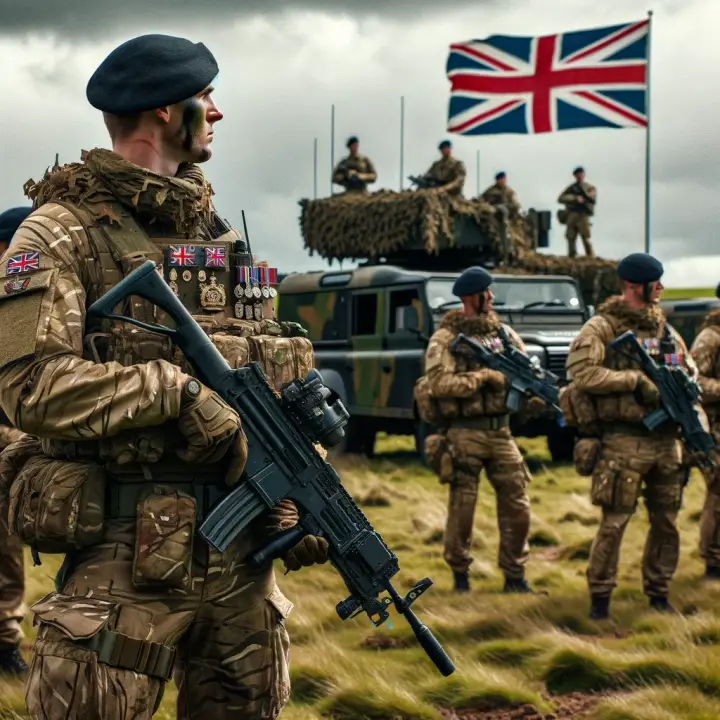
The British Army is currently experiencing its most significant reduction in force size in two centuries, paralleled by an alarming trend of military personnel departure outstripping recruitment, while Germany confronts a recruitment crisis so severe that its defense minister has publicly contemplated reinstating conscription.
Over the past year, the British armed forces, encompassing the Army, Navy, Air Force, and reserves, saw a collective decline of 3.9 percent, totaling a force of 184,865, with regular soldiers accounting for 75,983. Departures totaled 16,260, leading to a net loss of 7,440 troops. The British Army’s contraction has reached a level not seen in 200 years, a stark comparison given the country’s population growth from 20 million in 1820 to nearly 70 million today.
The decline in British military recruitment is attributed to various factors, including worsened pay, conditions, and a perceived erosion of traditional values. These issues are not unique to Britain, as Germany also grapples with a deficit in both manpower and military capability.
German Defence Minister Boris Pistorius spoke candidly about the severity of the situation, highlighting the potential need to reactivate conscription, which was suspended in 2011. Despite its legal provision within the constitution, Pistorius acknowledged the political challenges of such a move, exploring alternative models like Sweden’s selective conscription system.
Pistorius also expressed concerns regarding the United States’ shifting focus from Europe to the Asia-Pacific region, raising questions about Europe’s self-reliance in defense. He discussed the necessity for Europe to anticipate and compensate for potential reductions in U.S. military support, noting the urgency for defense industries to expand their capacities within the next five to eight years.
The German defense minister’s remarks come amid rising tensions with Russia, as Poland, a key NATO member, warns that the alliance should prepare for conflict sooner rather than later. The perspective in Europe is changing, with a call for preparedness and self-sufficiency in defense becoming increasingly evident.
The discourse in Germany reflects a broader European concern: the readiness to address potential threats independently. This sentiment is especially poignant given the ongoing conflict in Ukraine, where the West’s support is seen as a buffer against further Russian aggression.
In response to Pistorius’s comments on conscription, there has been a notable backlash within Germany, with politicians from his own party and coalition partners expressing opposition to the idea, citing the importance of voluntary service and the disproportionate nature of such a drastic measure to the current threat level.
As Europe faces these complex defense challenges, the dialogue continues on how best to ensure security and stability in a rapidly changing geopolitical landscape.