
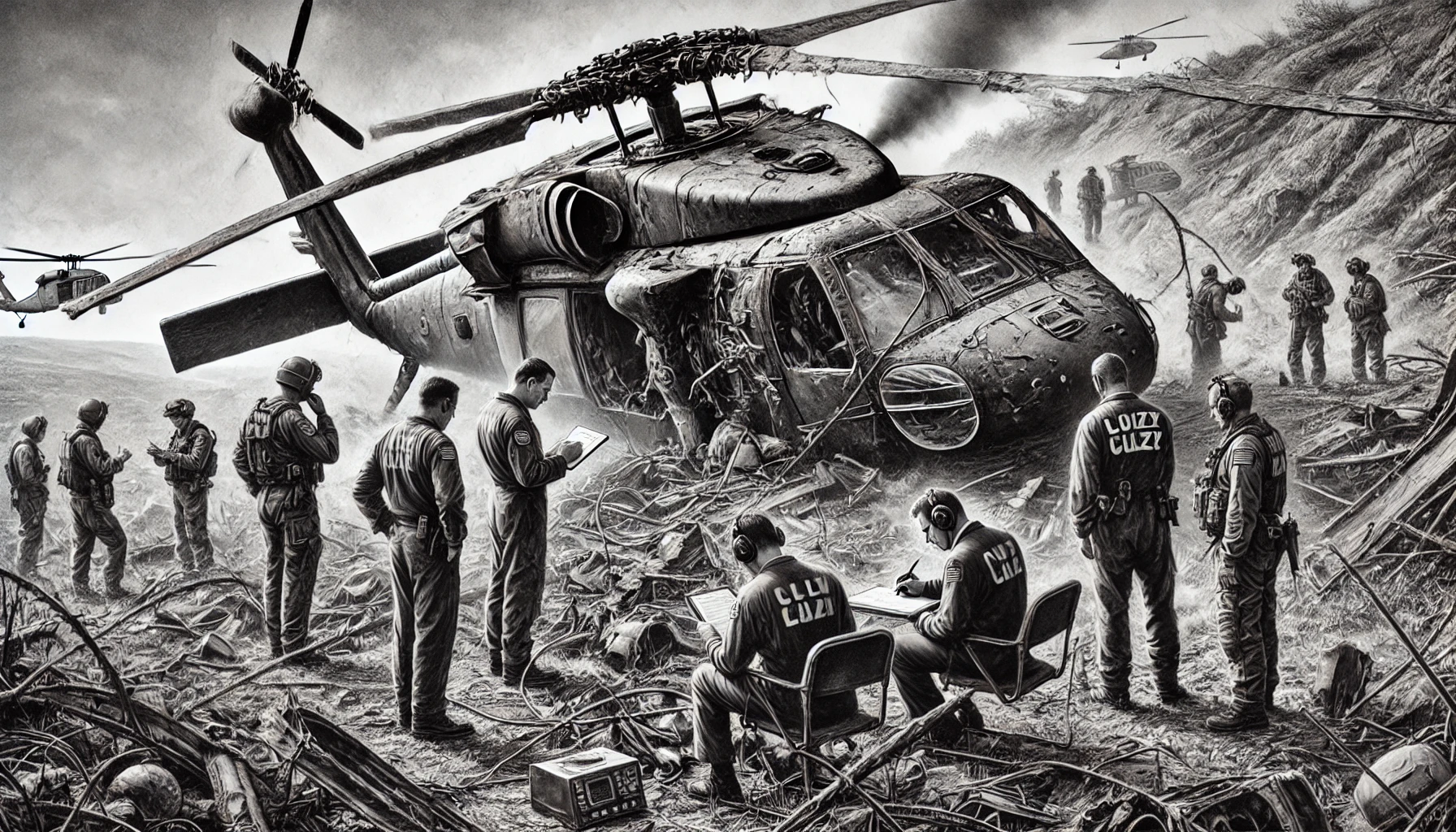
Federal investigators have determined that a U.S. Army Black Hawk helicopter involved in a fatal midair collision near Washington, D.C., did not receive or acknowledge a directive to maneuver behind a civilian aircraft before the crash. The National Transportation Safety Board (NTSB) released preliminary findings indicating that the lack of communication may have been a key factor in the accident.
The incident, which occurred in restricted airspace, involved a Black Hawk assigned to a military training operation and a privately owned civilian jet en route to Washington. According to the NTSB report, air traffic controllers instructed the helicopter to adjust its position and allow the jet to pass, but there was no recorded confirmation that the message was received or acted upon.
Officials are now analyzing cockpit recordings and radar data to determine whether the helicopter’s crew was experiencing communication failures or if other factors contributed to the crash. The investigation is also reviewing procedural protocols for military aircraft operating in congested airspace near the nation’s capital.
The collision resulted in multiple fatalities and has prompted renewed discussions about air traffic control coordination between civilian and military aircraft. Aviation experts suggest that additional safeguards may be necessary to prevent similar tragedies, including improved communication protocols and enhanced situational awareness training.
As the investigation continues, federal agencies are working to determine whether regulatory adjustments are needed to mitigate risks in restricted airspace and improve coordination between military and civilian aviation operations.