
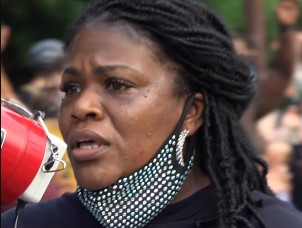
On Independence Day, Representative Cori Bush (D-MO) found herself at the center of a heated controversy after advocating for reparations to be paid to black people in the United States. In a bold statement, she criticized the Declaration of Independence, asserting that it was authored by enslavers who failed to recognize the humanity of Black individuals. Bush took to social media, declaring that the present day presented a perfect opportunity to demand reparations.
However, the response to her tweet was overwhelmingly negative, with a majority of the reactions veering toward hostility. Writer Ian Miles Cheong questioned the necessity of reparations, suggesting that the bloodshed of countless white individuals during the Civil War had already paid a significant price. Jeremy Redfern, press secretary for Florida Governor Ron DeSantis, employed humor, playfully remarking that Bush would need reparations herself for the avalanche of negative responses she received.
Among the critical voices, some urged Bush to remain silent on the matter, while others expressed a belief that she lacked sufficient understanding of the framers’ intentions and the historical context surrounding their efforts. Chris Loesch emphasized the significance of figures like Frederick Douglass, who held the framers in high esteem despite their flaws. Political strategist Ryan Girdusky criticized Bush’s approach, suggesting that she was focused on tearing down rather than building up.
The exchange took a sharper turn as attorney and columnist Kurt Schlichter resorted to an insulting comment, dismissing Bush as a “buffoonette.” Political commentator Varad Mehta expressed strong disdain, describing Bush’s stance as repugnant. Libby Emmons, editor-in-chief of The Post Millennial, provided a counterargument, highlighting that out of the 56 signers of the Declaration, 11 were guilty of enslaving others, while figures like Jefferson, Adams, Franklin, and a few others were actually abolitionists.
The online discourse surrounding Bush’s demand for reparations showcased the deep divides and passionate opinions held by individuals across the ideological spectrum. It underscored the complexity of historical narratives and the varying interpretations of the framers’ intentions. The clash of viewpoints exemplified the ongoing debates surrounding the legacy of slavery and the calls for redress in contemporary society.