
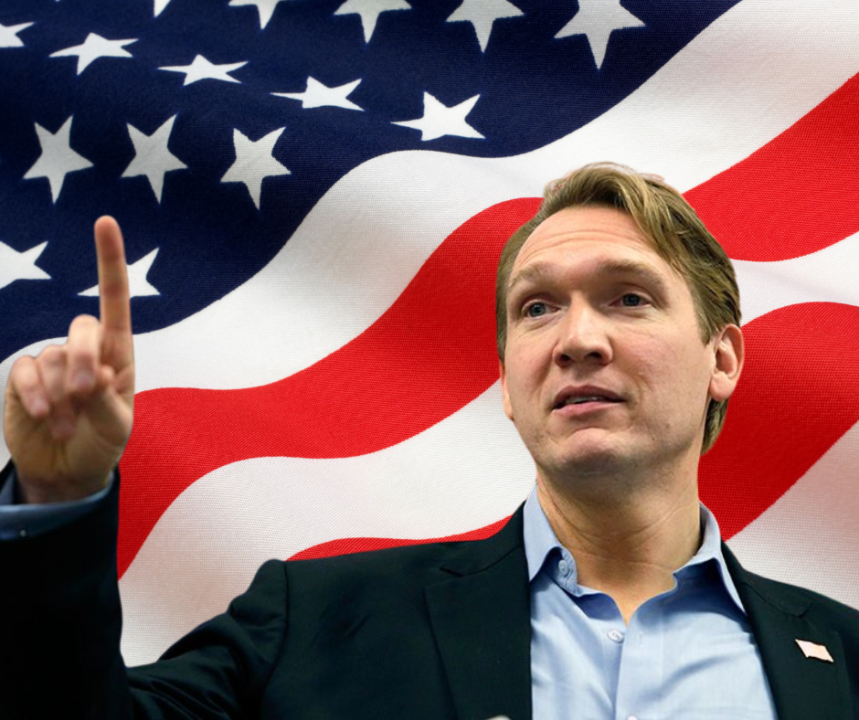
Nate McMurray, a Democratic congressional candidate from New York, has sparked controversy with his heated remarks on social media following the House’s passage of a $60 billion aid package for Ukraine. McMurray took to the platform X, where he vociferously celebrated the bill’s approval and simultaneously issued a provocative statement against supporters of the “Make America Great Again” movement, famously associated with former President Donald Trump. He tweeted, “Slava Ukraine. Die MAGA die. You lose,” directly linking his political opponents to the defeat in the legislative vote.
The backlash was immediate and severe, with critics accusing McMurray of inciting violence against MAGA supporters. These accusations gained traction as some social media users reported his post to X, citing concerns over the platform’s policies against violent rhetoric. McMurray later attempted to clarify his comments in a follow-up post, suggesting that the MAGA movement should “expire,” “fade,” or “disintegrate,” rather than literally die.
This episode unfolded in the broader context of McMurray’s campaign for the 26th Congressional District in western New York, a seat that includes parts of Erie and Niagara counties. His campaign has been marked by his outspoken stance and prior political endeavors, including serving as the town supervisor of Grand Island and running in a previous special election for New York’s 27th District, where he was narrowly defeated.
Additionally, McMurray is currently embroiled in a legal dispute with a Democratic primary competitor, state Senator Tim Kennedy, who has challenged the validity of over a thousand signatures on McMurray’s electoral petition. The lawsuit alleges fraud and the use of an ineligible canvasser, adding another layer of complexity and contention to McMurray’s campaign efforts.
The unfolding drama around McMurray’s controversial remarks and the legal challenges he faces highlights the intense polarization in American politics, especially in the context of U.S. foreign aid and its domestic political ramifications. McMurray’s situation underscores the volatile nature of political discourse in the current climate, where comments made on social media can escalate into significant political and legal battles.