
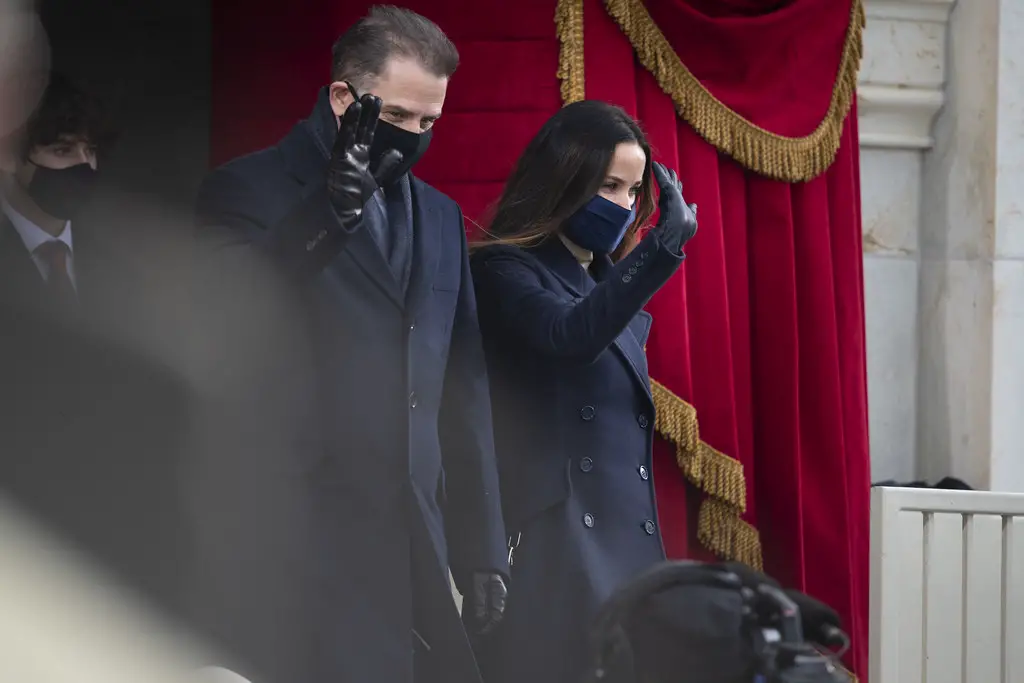
The son of President Joe Biden, Hunter Biden, is currently facing legal hurdles. Senator Chris Murphy (D-CT) has addressed these issues, admitting that although the prosecution may be justified, Hunter Biden’s conduct should not be confused with the 2024 presidential election.
Murphy acknowledged Hunter Biden’s legal issues when appearing on NBC News’s “Meet the Press,” calling him a “very troubled individual” whose acts have drawn attention from the law. After a previous indictment for tax-related misdemeanors and a botched plea agreement on firearms charges, Hunter Biden was subsequently hit with nine new tax charges, comprising a combination of felonies and misdemeanors. This further complicated his legal position.
Senator Murphy highlighted that Hunter Biden is not a political person and will not play a role in the 2024 elections in spite of these developments. He said, “The American people understand that Hunter Biden is not going to be on the ballot next fall — that Joe Biden is going to be on the ballot.”
Murphy then turned the attention to the Trump family, emphasizing Jared Kushner’s transactions with Saudi Arabia in particular. He voiced concerns on the Trump family’s behavior after leaving the White House, implying that they have benefited greatly from Donald Trump’s election.
Murphy reiterated his faith in the judicial system’s capacity to hold Hunter Biden accountable when host Kristen Welker steered the subject back to Biden. He insisted that the American people would see the court cases play out.
Murphy compared the possible results of a rematch between Biden and Trump in the 2024 presidential contest. Despite differing views among the public on the economy and Biden’s management of it, he praised President Biden for his efforts in stabilizing the US economy and chastised the Trump administration for plans he feels would criminalize abortion and benefit the wealthy.
Senator Murphy’s remarks, which will have a big impact on the upcoming presidential race, highlight the continuous complexity of political and legal narratives in the United States.