
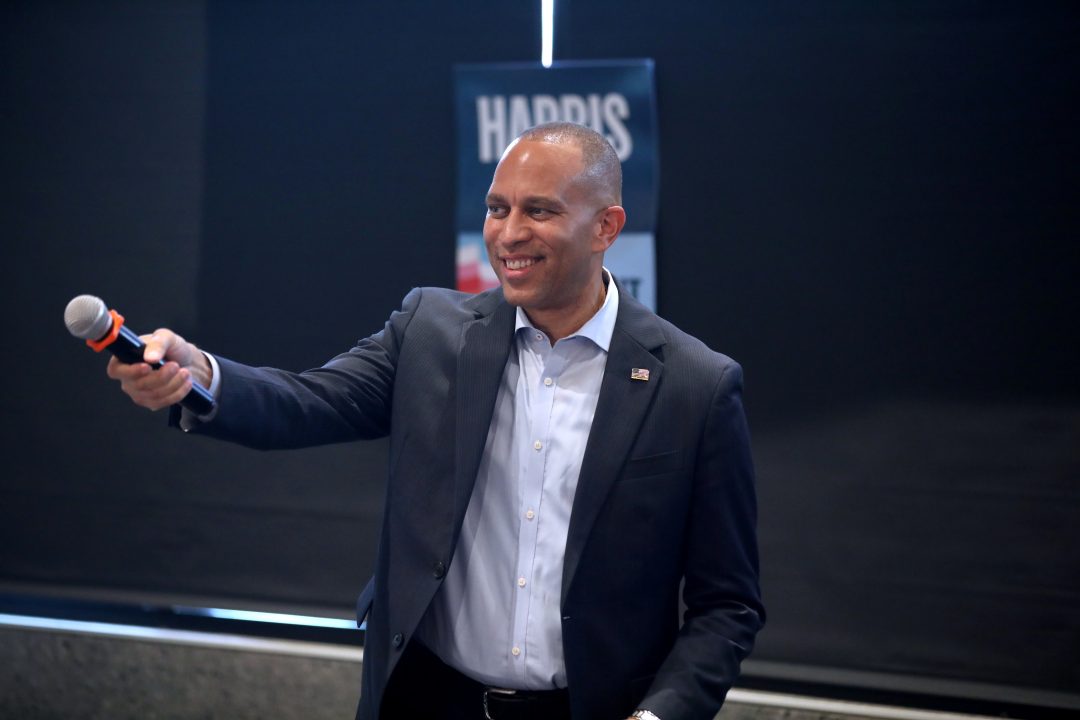
House Minority Leader Hakeem Jeffries dismissed suggestions that Vice President Kamala Harris’s election loss to Donald Trump was predominantly due to racism and misogyny. Appearing on a media panel, Jeffries took a nuanced stance, focusing instead on broader campaign dynamics and voter priorities.
The conversation arose during a segment where a host proposed that systemic biases against Harris, as a woman of color, played a significant role in her defeat. Jeffries, however, pointed to a more complex political landscape. “Elections are multi-faceted,” he said. “While discrimination exists in society, we must also acknowledge that campaigns succeed or fail based on their ability to connect with voters and address their concerns.”
Jeffries underscored the importance of reflecting on strategic missteps within the Democratic campaign rather than attributing the outcome solely to societal prejudices. He emphasized that voters often prioritize issues like the economy, public safety, and healthcare, suggesting that these areas may have been under-addressed during the Harris campaign.
The Democratic leader’s comments come amid a heated post-election analysis within the party. While some argue that Harris faced unique challenges as the first woman of color to lead a major ticket, others contend that her messaging and campaign strategy struggled to resonate in critical swing states.
Jeffries also stressed the need for Democrats to focus on unity and solutions moving forward. “Our job is to connect with voters, build a strong coalition, and offer a compelling vision for the future,” he stated.
The exchange has sparked further debate about the role identity politics plays in electoral outcomes and how the Democratic Party can navigate these issues in future campaigns. While some praised Jeffries for steering the conversation toward actionable insights, others criticized the dismissal of systemic barriers.
As Democrats regroup after the loss, Jeffries’s remarks highlight a call for introspection and a pragmatic approach to rebuilding voter trust. His focus on substantive engagement over divisive narratives reflects the challenges ahead as the party prepares for the next electoral cycle.