
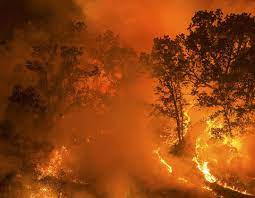
Hawaiian officials have pointed to alleged failures by the state’s main power utility company and downed power lines as the cause of catastrophic wildfires, challenging claims by Democrats who attributed the disaster to global warming. The situation has sparked a contentious debate about the root causes of the wildfires and the appropriate response to prevent future incidents.
In a lawsuit filed by the government of Maui County, Hawaii, it is alleged that Hawaiian Electric Company (HECO) and its subsidiaries neglected to properly shut down live electrical equipment during a red flag windstorm. As a consequence of this failure, downed power lines owned by the utility company are said to have ignited a series of fatal fires on the island. The lawsuit asserts that the defendants acted negligently by not de-energizing their equipment despite a National Weather Service Red Flag Warning, leading to the outbreak of fires that claimed lives and caused extensive damage.
Maui County contends that HECO has a responsibility to adequately maintain and repair electric transmission lines and associated equipment, as well as to manage vegetation to prevent contact with power lines. The lawsuit underscores the importance of ensuring that utility companies fulfill their obligations to prevent potential hazards and safeguard communities.
However, some Democratic lawmakers, top White House officials, and Hawaii Governor Josh Green have linked the wildfires to human-caused global warming. They view the catastrophe as evidence of the urgent need for climate action and policies that address environmental challenges. Several lawmakers, including Senator Ed Markey and Representative Ro Khanna, have called for immediate responses and declared the situation a climate emergency.
Conversely, experts have questioned the direct connection between the Maui fires and climate change, suggesting that the primary factors contributing to the disaster are poor forest and brush management, along with declining agriculture. Experts argue that these conditions create an environment in which fires can rapidly spread and become challenging to control. They stress that the extensive areas of unmanaged, nonnative grasslands resulting from decades of agricultural decline have significantly increased the landscape’s susceptibility to wildfires, particularly during unfavorable weather conditions.
Clay Trauernicht, a professor and environmental management expert at the University of Hawaii at Manoa, has emphasized that attributing the fires solely to weather and climate change is misleading. He points to the transformation of large swaths of land into nonnative grasslands due to historical agricultural practices, which has created a volatile environment for wildfires to flourish. This perspective highlights the importance of addressing land management practices to mitigate the risk of future fire outbreaks.
The debate between attributing the wildfires to utility negligence or climate change illustrates the complexity of addressing environmental disasters. It underscores the need for comprehensive policies that encompass responsible utility management, effective land stewardship, and climate change mitigation. As different parties offer their interpretations of the situation, it becomes evident that a multifaceted approach is necessary to prevent such tragedies in the future. Regardless of the driving factors, the incident serves as a reminder of the importance of cooperation and collaboration among various stakeholders in managing environmental risks and ensuring community safety.